


Applications and Features
1. Applications
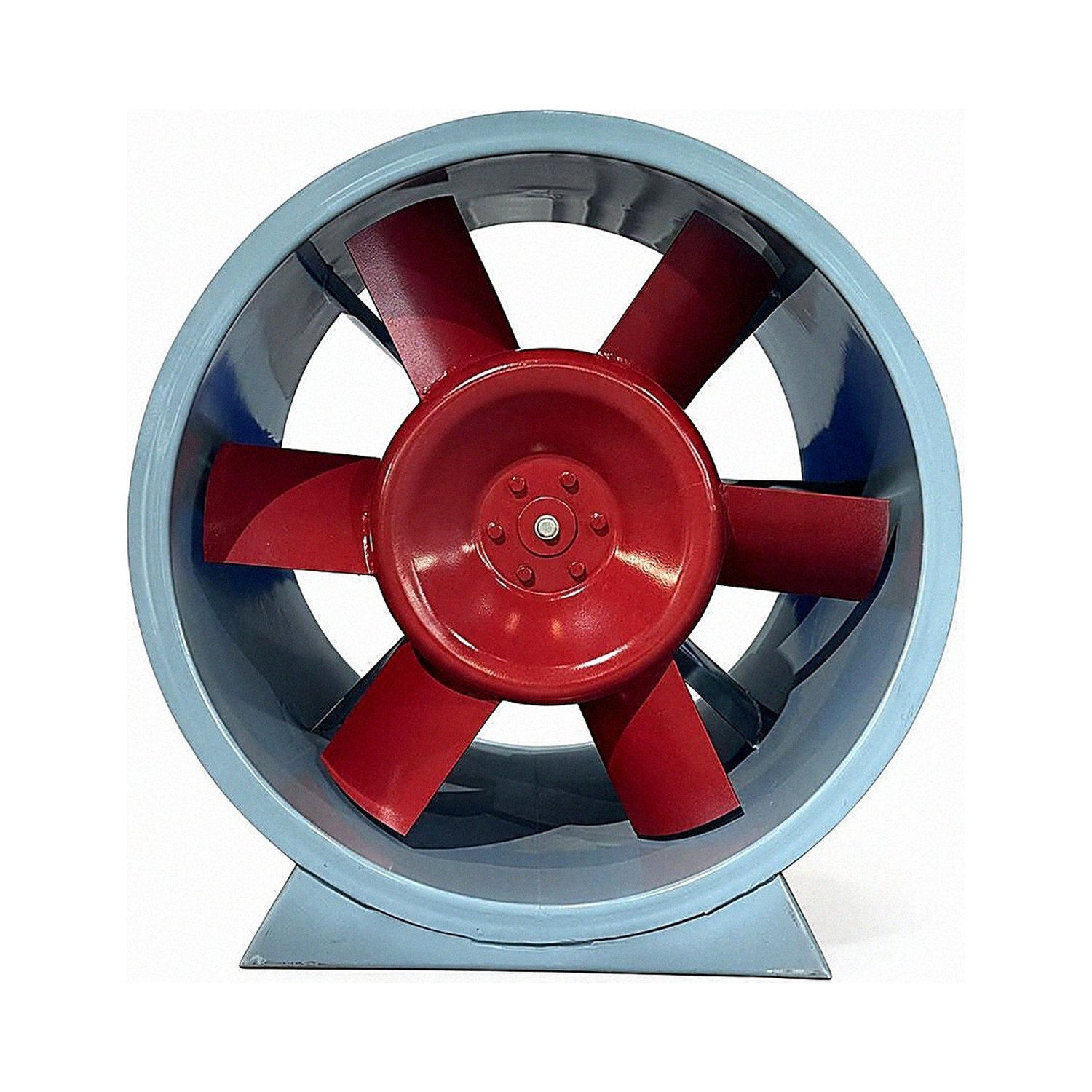
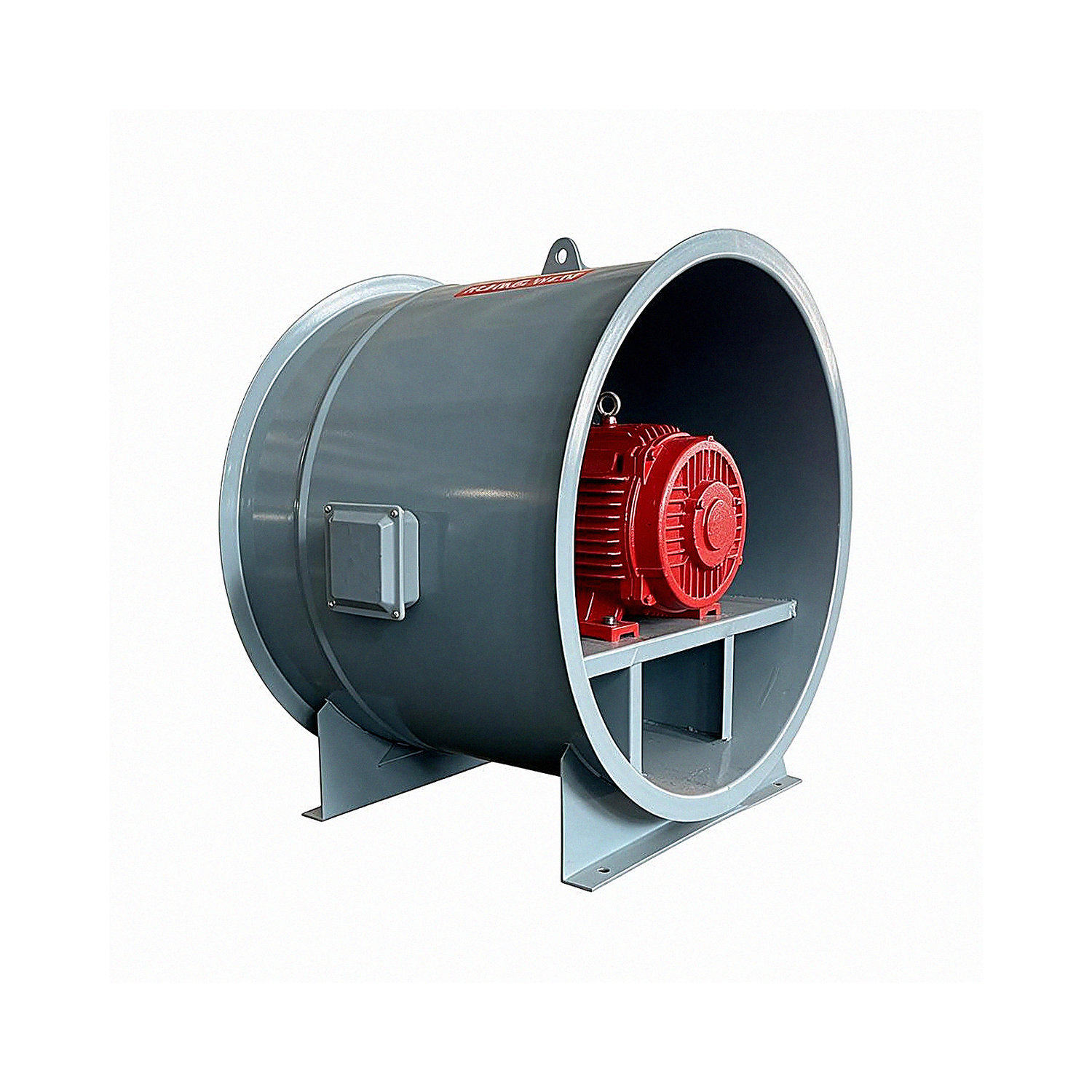
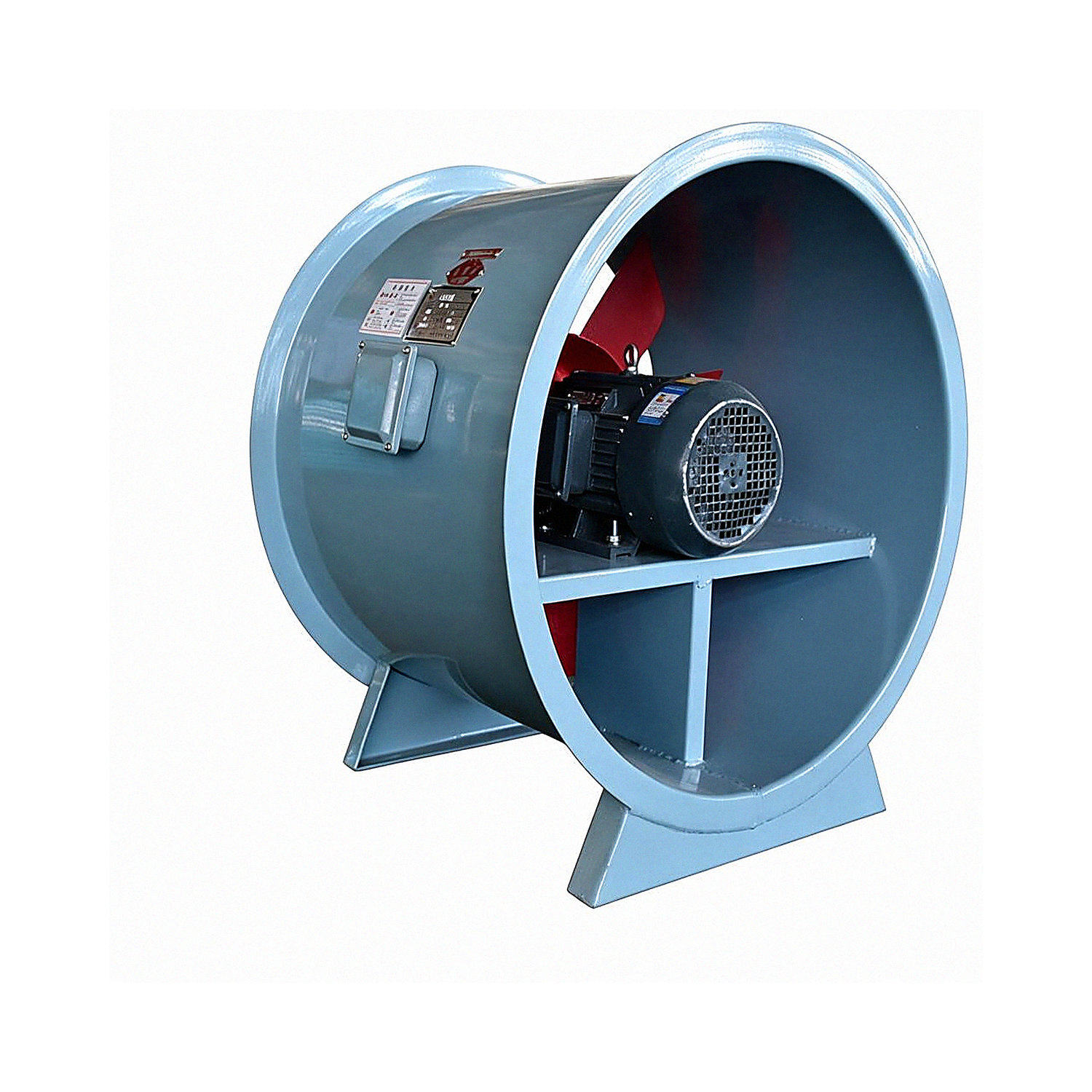
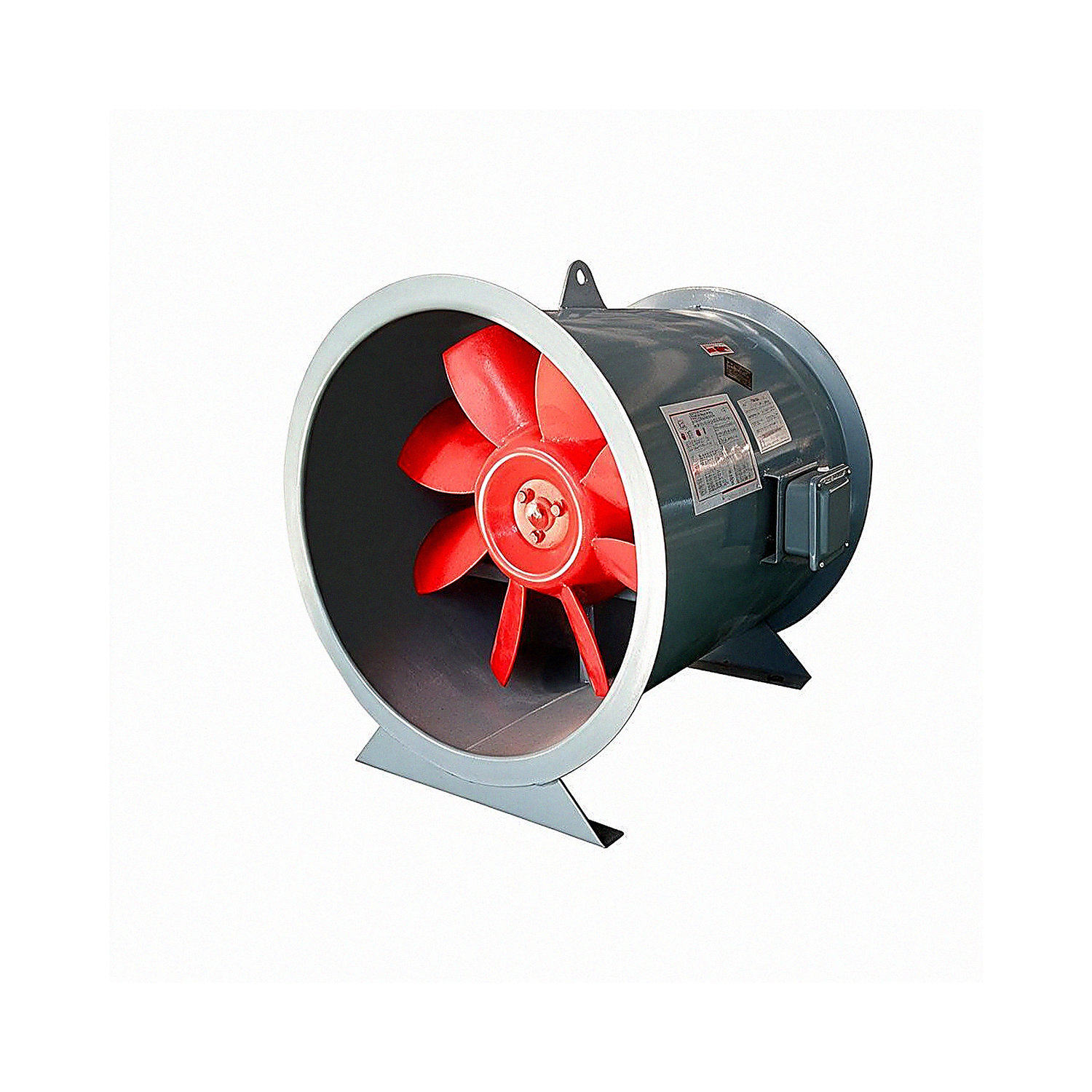
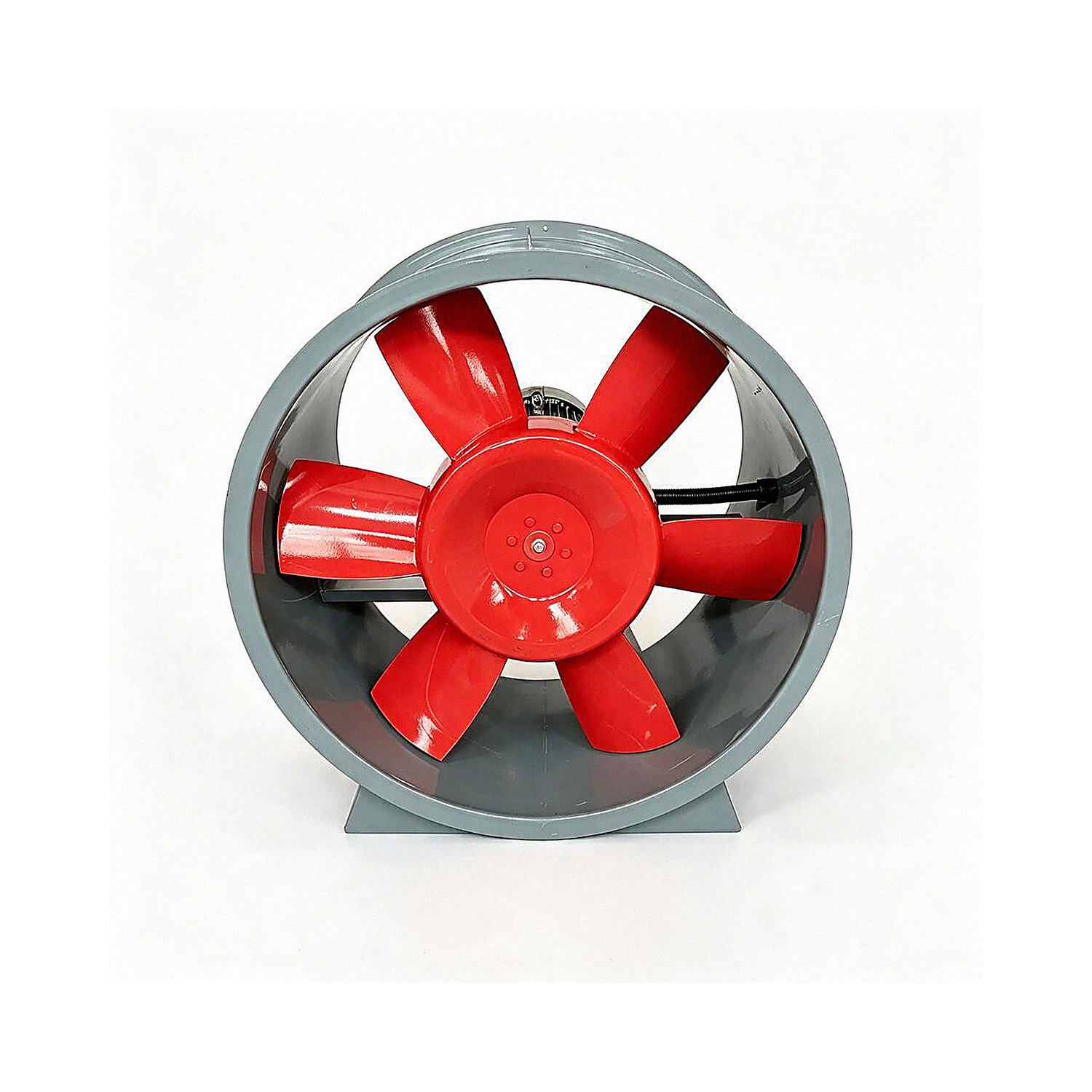
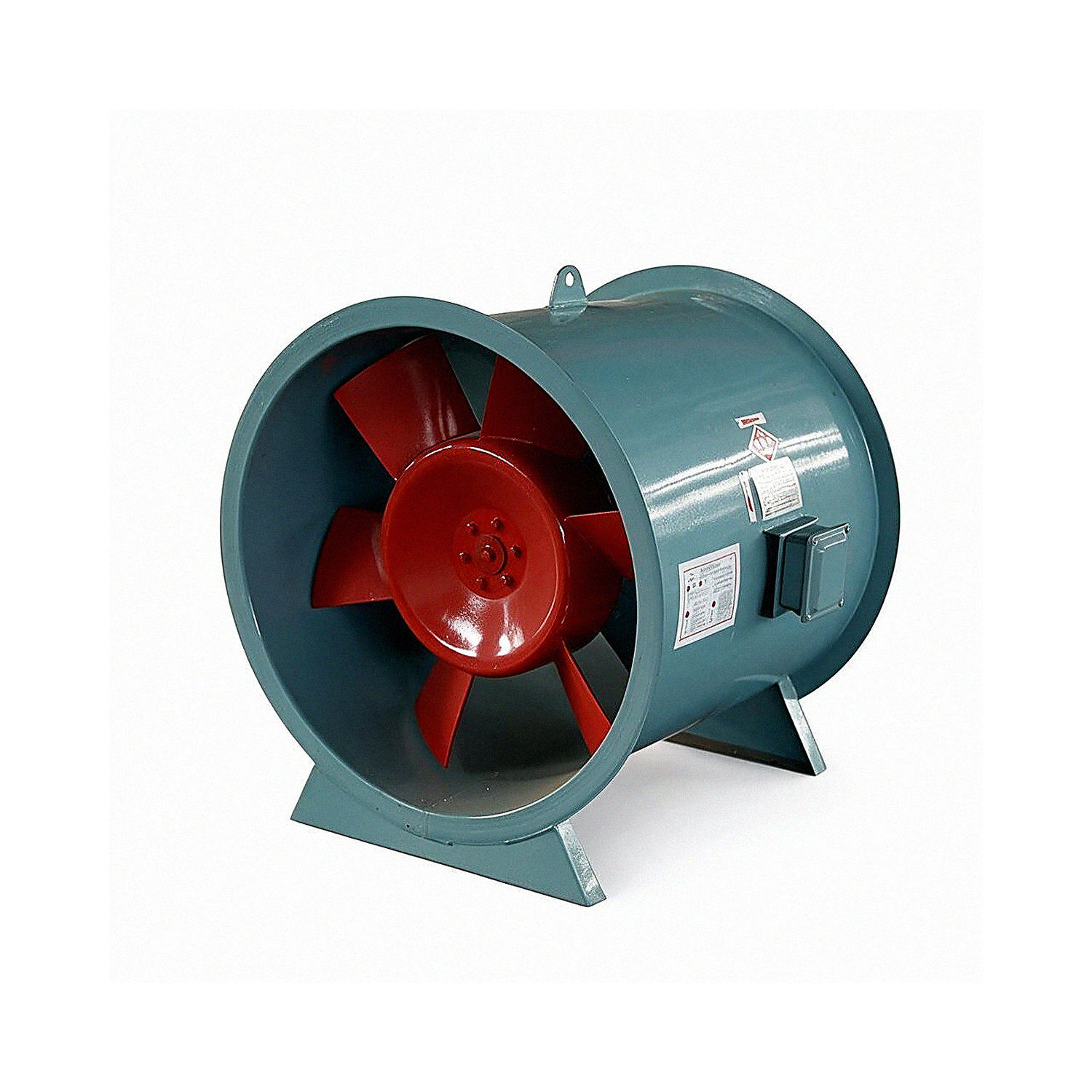
DTF series axial-flow smoke exhaust fans can be used for smoke extraction in various buildings, as well as for smoke extraction and ventilation in buildings, civil air-defense projects, underground railways, mine tunnels, and similar facilities.
2. Features
DTF series axial-flow smoke exhaust fans are energy-efficient, run smoothly, produce low noise, withstand high temperatures, and feature a rational structure. Compared with centrifugal fans with the same airflow, they take up two-thirds less space and weigh more than half as much. They provide the required power and are easy to install in vertical, horizontal, or suspended configurations;
The fan is designed with a special motor cooling system and an internally mounted air-cooled motor;
The fan can be installed horizontally, vertically, or as a ceiling-mounted unit according to building requirements. Power supply: three-phase, 380 V, 50 Hz;
When the temperature of the medium in the main air duct is 280℃, the fan can operate continuously for more than 30 minutes. At 100℃, it can operate continuously for 20 hours per cycle without damage. It can operate continuously at temperatures from -20~+45℃.
Complies with the Code for Fire Protection Design of High-Rise Civil Buildings (GB50016-2014), jointly issued by the State Bureau of Technical Supervision and the Ministry of Construction of the People's Republic of China;
Code for Fire Protection Design of Garage and Parking Lots (GB50067-2014);
Code for Design of Civil Air Defense Basement (GB50038-2019) ;
Inspected and approved by the National Quality Supervision and Testing Center for Fixed Fire Extinguishing Systems and Fire-Resistant Components, and certified under the 3C scheme for the full product range;
To meet the requirements of hazardous environments, the fan can be manufactured as an explosion-proof fan, with explosion-proof ratings of ExdblIBT4 and ExdblICT4;
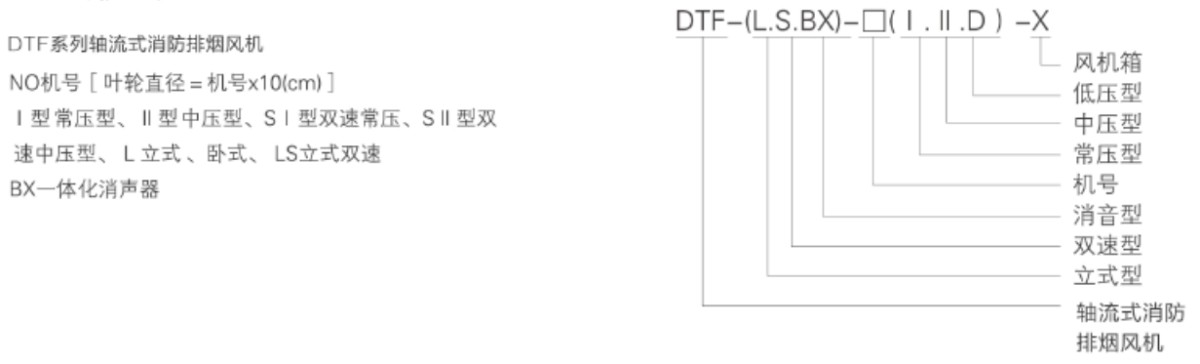
This product is available in five series: ① normal-pressure, single-speed; ② normal-pressure, two-speed; ③ medium-pressure, single-speed; ④ medium-pressure, two-speed; ⑤ low-pressure, single-speed.
Configurations
Performance and Selection
DTF-I single-speed, normal-pressure series axial-flow smoke exhaust fan performance parameter table
DTF-I single-speed, medium-pressure series axial-flow smoke exhaust fan performance parameter table
DTF-S I two-speed, normal-pressure series axial-flow smoke exhaust fan performance parameter table
DTF-S II two-speed, medium-pressure series axial-flow smoke exhaust fan performance parameter table
DTF-D axial-flow smoke exhaust fan performance parameter table
DTF-I axial-flow smoke exhaust fan performance curves
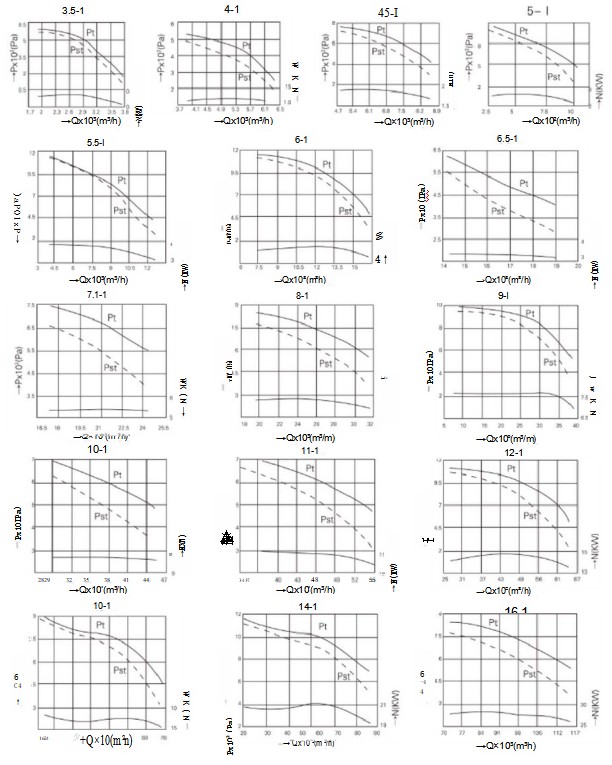
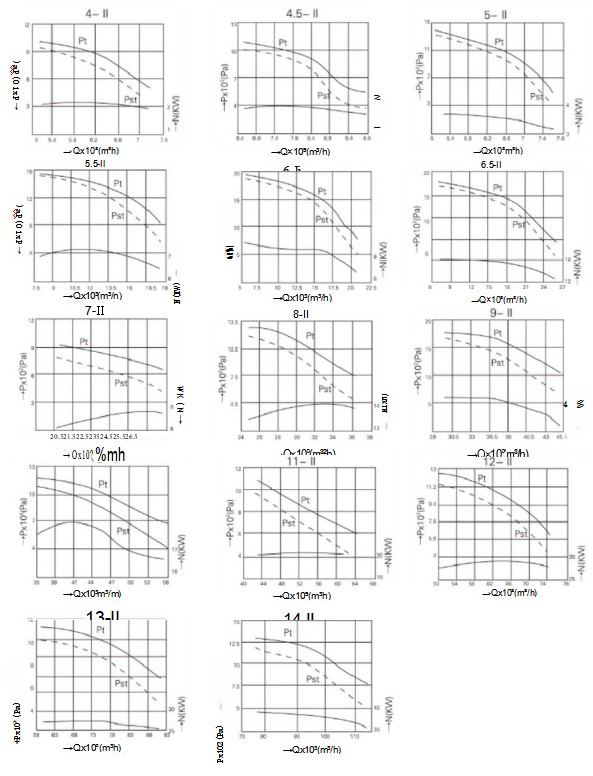
DTF-II axial-flow smoke exhaust fan performance curves
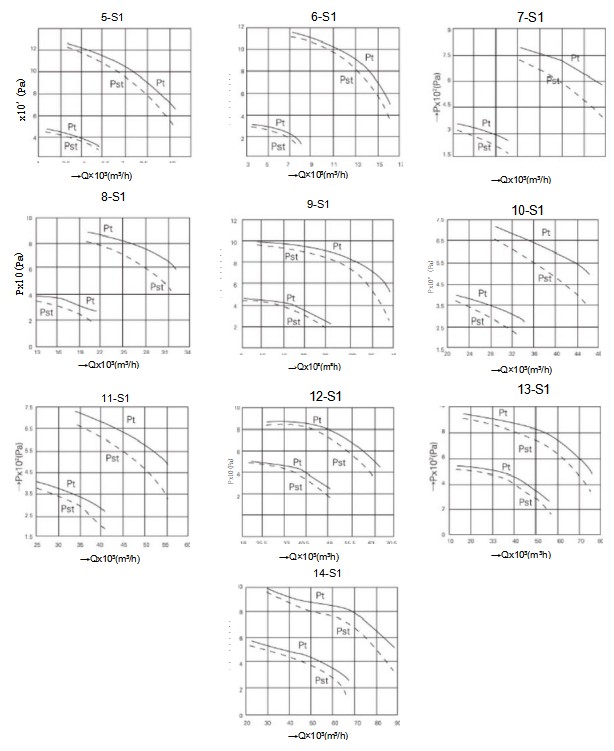
DTF- SI axial-flow smoke exhaust fan performance curves
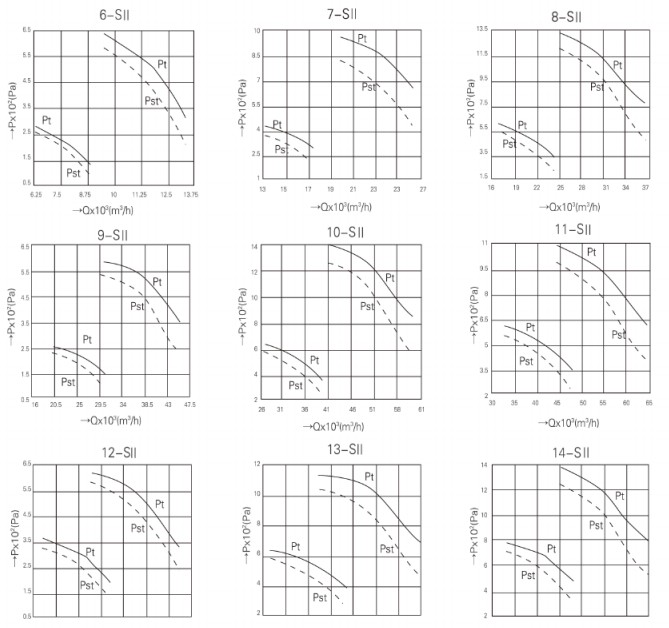
DTF-SII axial-flow smoke exhaust fan performance curves
Dimensions and Installation
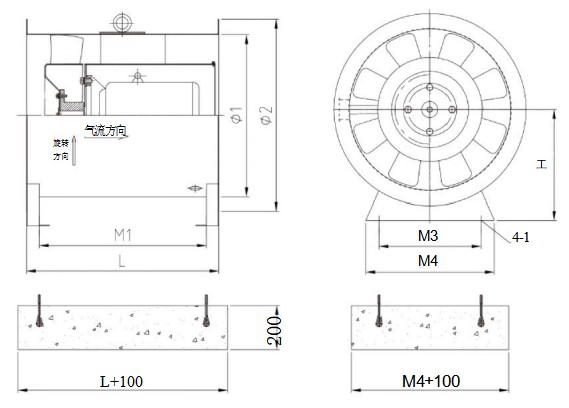
DTF-1 axial-flow smoke exhaust fan outline and installation dimensions
Notes: 1. To ensure that the fan fits the user's installation dimensions, the base mounting holes (4- φ) are for reference only. Unless otherwise specified by the user, the fan flange is generally not drilled. Special requirements can be accommodated upon request.
2. Products with model numbers below 7# generally use a structure without an inner cylinder. Special requirements can be accommodated upon request.
DTF-II axial-flow smoke exhaust fan outline and installation dimensions
DTF-SI axial-flow smoke exhaust fan outline and installation dimensions
Notes: 1. To ensure that the fan fits the user's installation dimensions, the base mounting holes (4-φ) are for reference only. Unless otherwise specified by the user, the fan flange is generally not drilled. Special requirements can be accommodated upon request.
2. Products with model numbers below 7# generally use a structure without an inner cylinder. Special requirements can be accommodated upon request.
DTF- D axial-flow smoke exhaust fan outline and installation dimensions
Notes: 1. To ensure that the fan fits the user's installation dimensions, the base mounting holes (4-φ) are for reference only. Unless otherwise specified by the user, the fan flange is generally not drilled. Special requirements can be accommodated upon request.
2. Products with model numbers below 7# generally use a structure without an inner cylinder. Special requirements can be accommodated upon request.
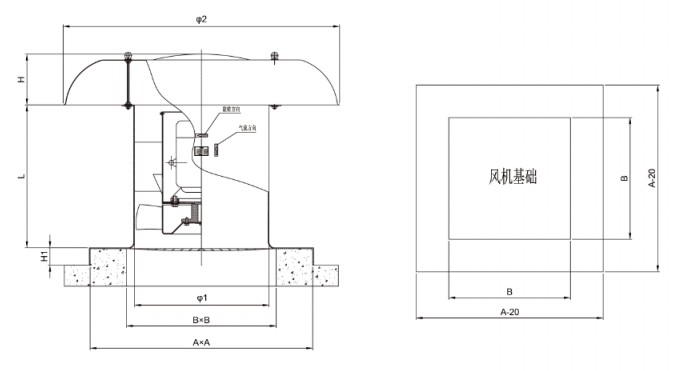
DTF-I-L vertical axial-flow smoke exhaust fan outline and installation dimensions
DTF-I-L vertical axial-flow smoke exhaust fan outline and installation dimensions
DTF-SI-L vertical axial-flow smoke exhaust fan outline and installation dimensions
DTF-SII-L vertical axial-flow smoke exhaust fan outline and installation dimensions
DTF-× Outline Drawing
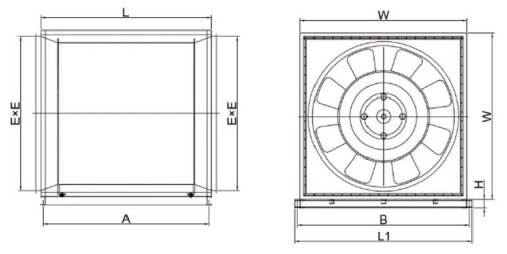
DTF-X Series Fan Box Dimensions Table
DTF-BX Outline Drawing
The DTF-BX sound-attenuating axial-flow smoke exhaust fan consists of three parts: a sound-insulated fan, an inlet silencer, and an outlet silencer. The technical parameters of the sound-insulated fan are the same as those of the non-sound-insulated fan. The inlet and outlet silencers are manufactured in accordance with national standard drawings. The silencer length LX is available in five sizes: 600, 900, 1200, 1500, and 2000. Users may also specify a silencer length LX based on actual installation conditions. The noise reduction values for silencers of different LX lengths are listed in the table below:
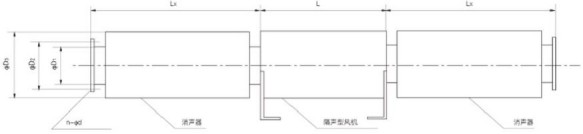
Note: The silencer is a separate item and is not included in the BX model. It must be specified separately when ordering.
Frequently Asked Questions
In addition to meeting airflow and pressure requirements, a fire smoke exhaust fan must also meet the high-temperature smoke exhaust conditions, operating duration, control interlocking, and relevant testing and certification requirements specified for the project. A standard axial flow fan can only be used as a fire smoke exhaust fan if the specific model has the required fire safety documentation.
Haitong’s current catalog states that this series can be configured with single-speed or multi-speed operation according to building requirements, to meet the needs of normal ventilation and high-temperature smoke exhaust during a fire. The operating points for both conditions, speed switching, and control logic must be confirmed in accordance with the project design.
The project’s power supply conditions can be assessed, but changes in frequency affect rotational speed, airflow, pressure, and power. Fan performance and motor configuration must therefore be rechecked for the target frequency.
Similar temperature-resistance claims have appeared in Haitong’s existing brochures, but fire performance requires strong supporting evidence. Before publishing the content on the official overseas website, the current valid test reports, certificates, and scope of applicability for the relevant model must be verified. Until this evidence has been reviewed, it is not advisable to present a specific temperature and duration as a blanket commitment for all models.
This is permitted only when a currently valid certificate clearly corresponds to the specific model, product name, and scope of application shown on this page. The appearance of “CCCF/3C” in an old brochure does not automatically mean that the certification applies to all HTF models or all fire and smoke exhaust fans.
Whether a VFD is permitted and the operating logic in fire mode must be confirmed in accordance with the project’s fire control requirements and applicable standards. If the project uses the fan for both normal ventilation and fire smoke exhaust, the normal mode, fire mode, bypass/interlock requirements, and final approval criteria should be clearly defined.
Haitong’s existing promotional materials mention several installation methods, but whether a specific model supports a particular installation orientation should be confirmed individually based on its structure, bearing/motor arrangement, foundation, and maintenance requirements. The arrangement should be finalized using the GA drawing before production.
Please provide the target country/region, applicable fire protection codes and standards for the project, temperature and duration requirements, approval requirements, and a list of required certificates or test reports. Haitong will then check which existing documents are available for the specific model. Chinese domestic certificates should not be assumed to automatically qualify as statutory certifications in the target market.
Please provide the model, airflow, total/static pressure, installation orientation, air inlet and outlet configuration, material, insulation, motor voltage/frequency, control method, filter module, smoke control and fire protection requirements, quantity, and packaging requirements. Performance, dimensions, and certification information are subject to the confirmed product and order documents.