


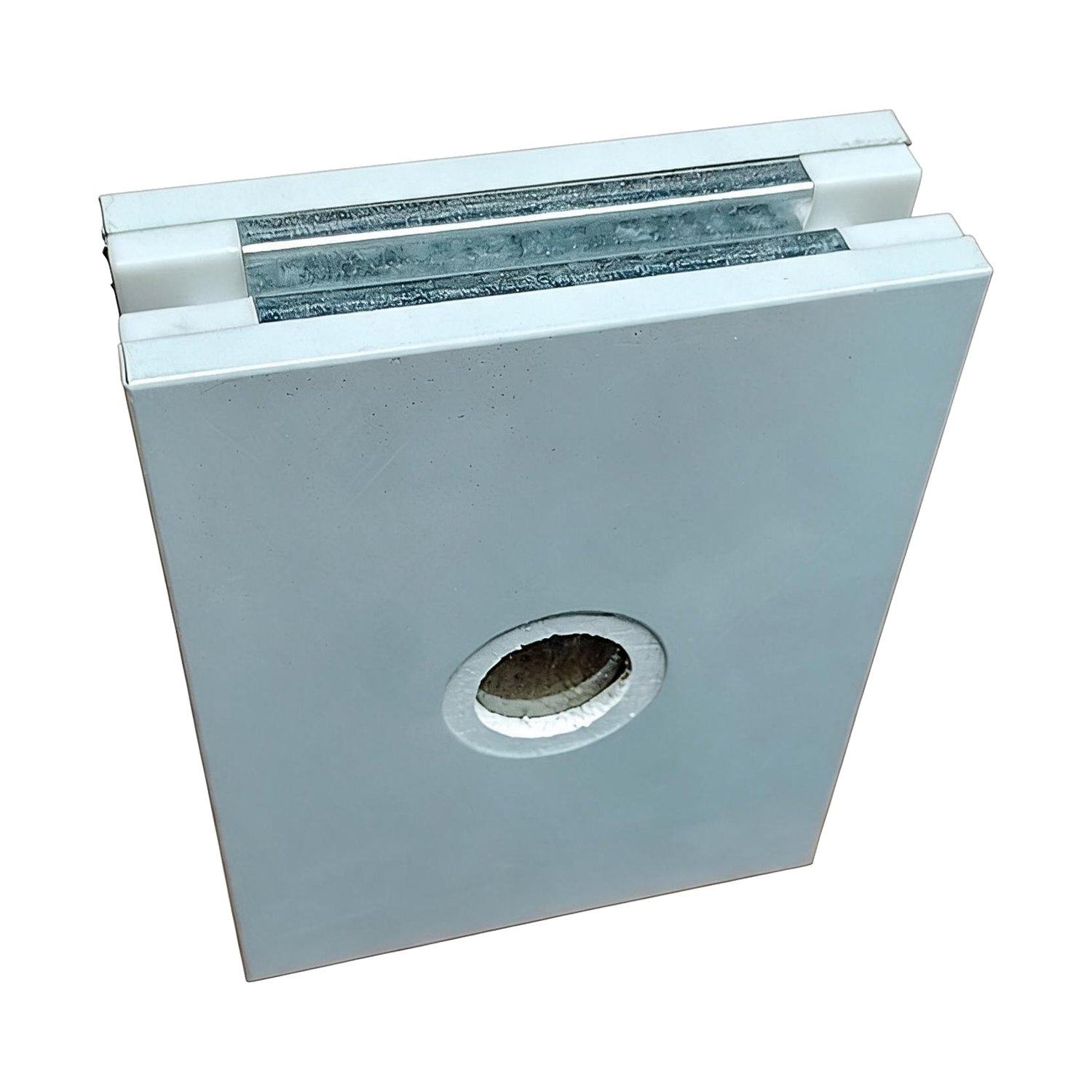
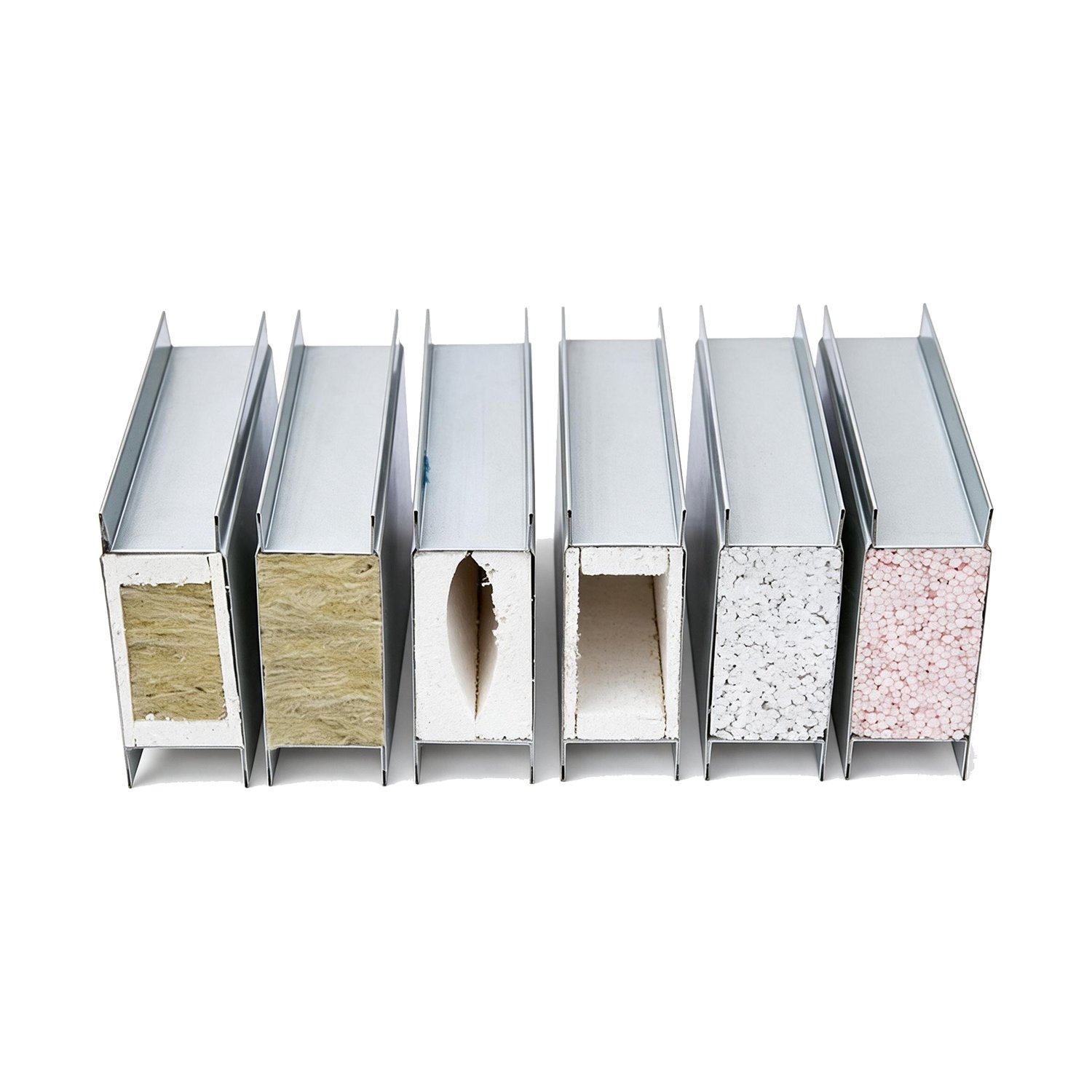
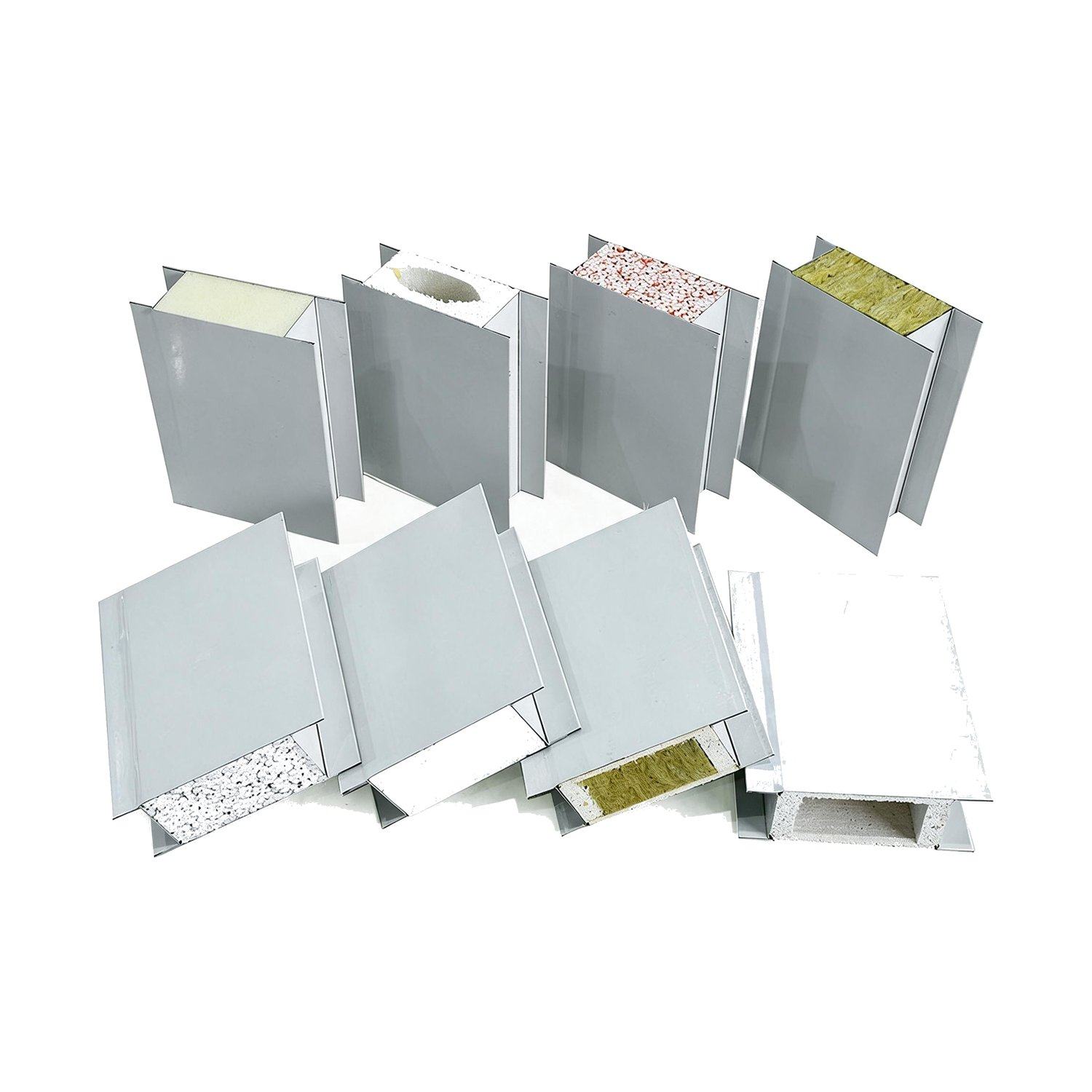
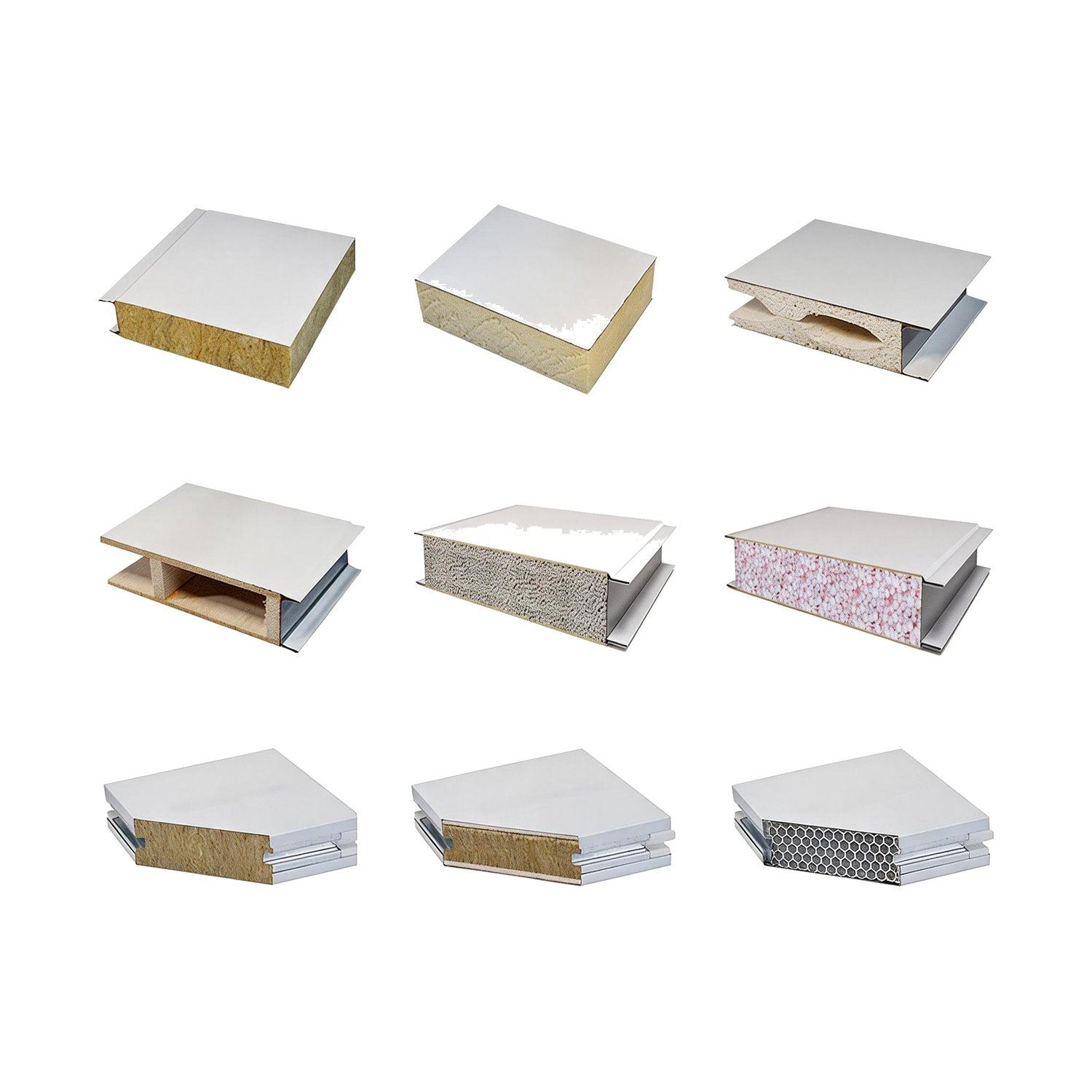
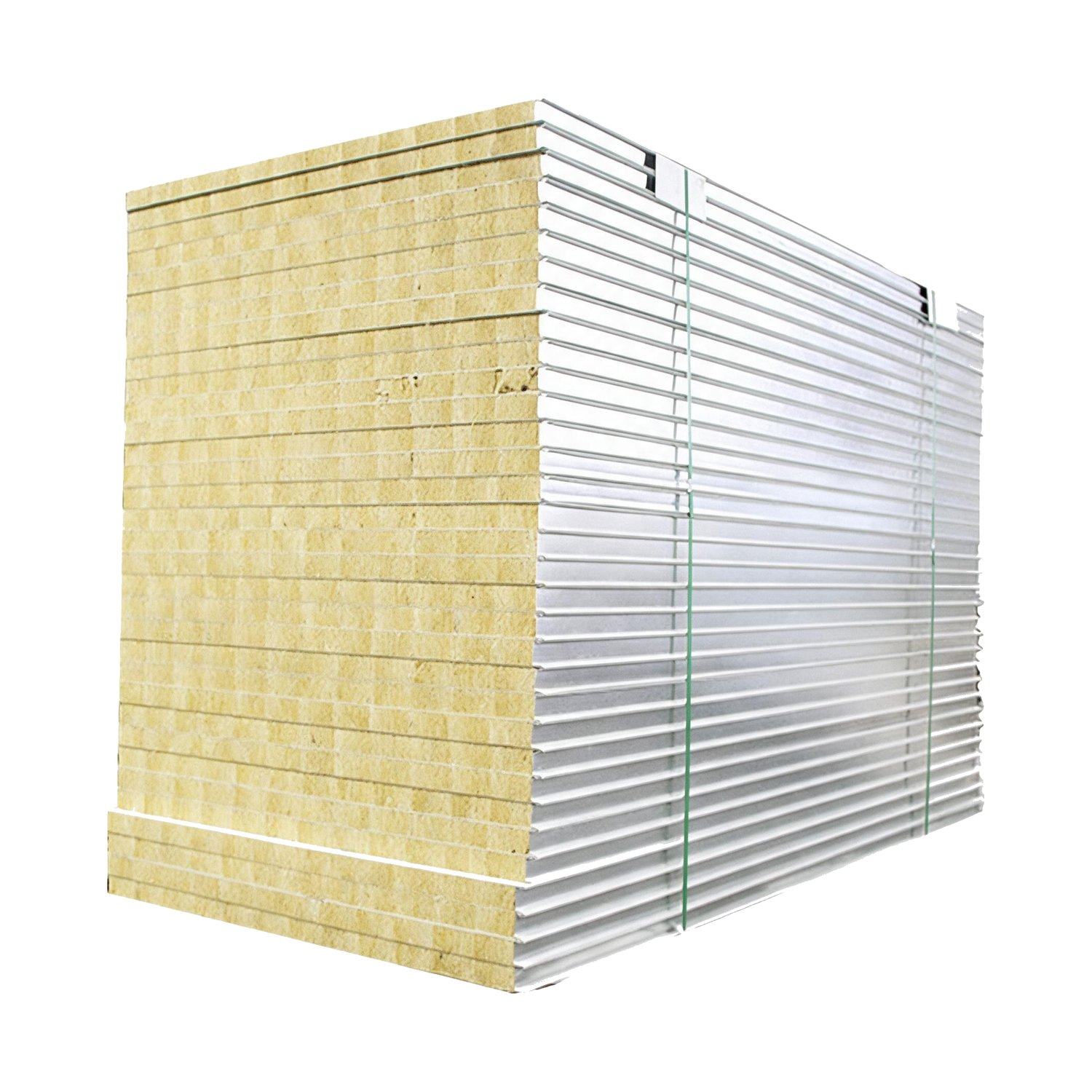
Cleanroom sandwich panels are a new type of building material. They are self-supporting composite panels consisting of two metal facings bonded to a sound-insulating and thermal-insulating core. In recent years, they have been widely used in various types of industrial buildings, giving buildings a rich visual appearance and a simple, modern, and imposing effect. They bring architects’ creativity to life and realize their inspirations, making them widely favored by owners and architects.
Cleanroom sandwich panels are available in two series—handmade panels and machine-made panels—with more than 20 product types. Made from high-quality raw materials and incorporating proven panel profiles and scientifically designed installation details, they provide a multifunctional cleanroom composite panel that meets individual requirements and combines fire protection, thermal insulation, waterproofing, weather resistance, wind resistance, compressive strength, sound absorption, and sound insulation. They are suitable for most cleanroom applications, including semiconductors, electronics, healthcare, pharmaceuticals, bioengineering, aerospace, optics, machinery, chemicals, and animal husbandry.
Rock Wool
Cleanroom panels use hydrophobic rock wool from a leading brand, which resists moisture and does not absorb water. Ordinary rock wool from second- or third-tier brands absorbs water and does not resist moisture. High-density hydrophobic rock wool is made from high-quality basalt and diabase, melted at high temperatures and spun into fibers at high speed. Small amounts of binder, dust-proof oil, water repellent, and other additives are then added. Its hydrophobicity can reach 99.9%. In environments with very high relative humidity, its volumetric moisture absorption rate is below 0.2%. When tested in accordance with ASTM C1104 or ASTM C1104M, its mass moisture absorption rate is below 0.3%. It has low water absorption, strong hydrophobicity, low resistance, and good water vapor permeability. Rock wool is chemically stable, with a pH value of 7–8, and is neutral or slightly alkaline. It does not corrode metals such as carbon steel, stainless steel, or aluminum, and can effectively reduce mold on building walls.
Steel Strip
Cleanroom panels use 0.5 mm-thick, zero-spangle galvanized steel strip.
Adhesive
Cleanroom panels are made using high-strength adhesive from a leading brand and a fully automatic glue-spreading process. The proportions of the two components of the AB adhesive are precisely controlled, ensuring even and stable application. The adhesive cures naturally under cold pressing, creating a stronger, more durable bond. Ordinary adhesive and heat-drying processes can cause panels to crack easily.
Edge Trim
Cleanroom panels use high-quality galvanized steel edge trim for good fire performance. Plastic edge trim is not fire-resistant and poses a fire safety risk.
Manufacturing
Cleanroom panels are produced using high-precision equipment from a Taiwanese joint-venture brand, with a daily capacity of 5,000 m². The panels are manufactured to high precision to meet the supply requirements of large-scale projects.
Quality Materials, Crafted with Expertise
Cleanroom panels use core materials only from well-known leading brands. Common options include rock wool, polyurethane PIR/PUR, silicate rock wool, magnesium sulfate and magnesium oxide boards, paper honeycomb, aluminum honeycomb, EPS foam, and fire-resistant phenolic foam boards. These multifunctional sandwich core materials combine fire protection, thermal insulation, waterproofing, weather resistance, wind resistance, compressive strength, sound absorption, and sound insulation. They achieve Class A1 fire performance and can absorb a large amount of heat generated during combustion, slowing the rise in ambient temperature. They have passed testing and inspection by national fire protection and flame-retardant product quality supervision and inspection bodies, including MA, ilac-MRA, CNAS, and SDQI.

Machine-Made Cleanroom Color Steel Panels
The facings of machine-made cleanroom color steel panels can be made of color-coated steel, aluminum, stainless steel, galvanized steel, and other materials. Core materials include EPS (self-extinguishing expanded polystyrene), PU (polyurethane), fire-resistant rock wool, paper honeycomb, hollow magnesium oxide board, and magnesium board. The two facings are bonded using a high-strength adhesive and heat in an automatic laminating machine. These panels offer excellent properties, including low weight, high mechanical strength, thermal insulation, sound insulation, corrosion resistance, resistance to water vapor permeation, and weather resistance. They can also be installed quickly and flexibly, and dismantled and reused multiple times.
They are now widely used in cleanrooms at pharmaceutical plants, hospital operating rooms, electronics factories, and food factories; cold-storage facilities; packaged air-conditioning units; kiosks; exhibition halls; high-temperature drying rooms; office buildings; temporary offices; sports halls; industrial plants; temporary buildings at construction sites; and building mezzanines.

Features and Applications of Different Types of Machine-Made Cleanroom Color Steel Panels
EPS (self-extinguishing expanded polystyrene) cleanroom color steel sandwich panels:
Lightweight, with high mechanical strength, water-resistant, and an oxygen index ≥32 (0l). Primarily used for cleanroom ceilings and enclosures, building extensions, temporary offices, and warehouses. When the distance between supports is ≤1500 mm, the sandwich panel can withstand a bending load of 100–120 kg/m².
PU (polyurethane) cleanroom color steel sandwich panels:
Thermal and sound insulation, high strength, water-resistant, and an oxygen index ≥26 (0l); fire rating B1–B2. Cost-effective and commonly used in air-conditioning units, hospitals, and electronics factories. When the distance between supports is ≤1500 mm, the sandwich panel can withstand a bending load of 100 kg/m².
Fire-resistant rock wool cleanroom color steel sandwich panels:
Excellent fire performance; non-combustible, with a Class A fire rating. Suitable for drying rooms, spray booths, buildings, and thermal and sound insulation in ships. When the distance between supports is ≤1500 mm, the sandwich panel can withstand a bending load of 80 kg/m².
Paper honeycomb cleanroom color steel sandwich panels:
High strength, lightweight, and Class B1 fire-rated. Widely used in clean buildings for electronics, biotechnology, food, pharmaceuticals, healthcare, and military applications. When the distance between supports is ≤1500 mm, the sandwich panel can withstand a bending load of 90 kg/m².
Hollow magnesium oxide cleanroom color steel sandwich panels:
Made from a new generation of fire-resistant, environmentally friendly materials; Class A non-combustible, with high flatness and strength. When the distance between supports is ≤1500 mm, the sandwich panel can withstand a bending load of 90–120 kg/m².
Magnesium and silicate rock cleanroom color steel sandwich panels:
Meet the national Class A2 fire rating and offer excellent thermal insulation. Environmentally friendly, free from toxic substances, and non-polluting, with excellent breathability and water resistance. When the distance between supports is ≤1500 mm, the sandwich panel can withstand a bending load of 90–120 kg/m².
Magnesium oxysulfate cleanroom color steel sandwich panels:
Excellent fire performance and thermal insulation, waterproof and moisture-resistant, with strong bonding between the core and facings, effective sound insulation, high strength, and environmentally friendly. When the distance between supports is ≤1500 mm, the sandwich panel can withstand a bending load of 100–120 kg/m².
Specifications:
A. Width: 1200 mm, 1150 mm, 1000 mm, 950 mm.
B. Thickness: 20 mm–200 mm.
C. Length: Adjustable as required.
Handmade Cleanroom Composite Panels
Handmade cleanroom composite panels are produced using a combination of semi-mechanical and manual processes. They feature smooth, attractive surfaces, high strength, sound insulation, thermal insulation, heat retention, seismic resistance, convenient connections, easy dismantling, concealed core materials, and easy installation. They can be made to the length and width required for a project and installed flexibly. They not only significantly reduce building foundation and structural costs but can also be dismantled and reinstalled multiple times, making construction and installation convenient and delivering substantial overall benefits.
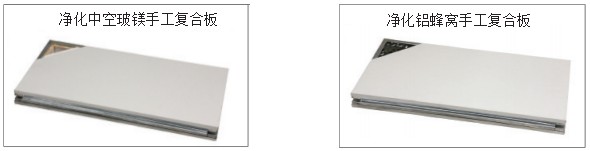
Facings: Color-coated steel, galvanized steel, stainless steel, anti-static panels, corrosion-resistant panels, and other materials specifically designed for cleanrooms.
Core materials: Magnesium oxide board, gypsum board, rock wool, aluminosilicate wool, glass wool, polyurethane (PU), paper or aluminum honeycomb, polystyrene (EPS), extruded polystyrene (PE), magnesium-based materials, and more.
Frames: Cold-formed galvanized steel frames on all four sides.
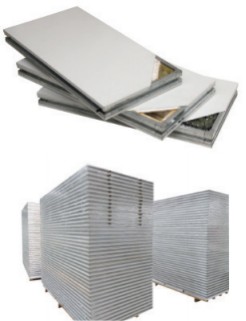
Specifications:
A. Facing thickness: generally 0.5 mm–0.7 mm;
B. Thickness: 50 mm, 75 mm, 100 mm;
C. Width: 980 mm, 1180 mm; custom widths available for non-standard panels;
D. Length: Made to order (generally ≤6000 mm);
E. Connections: Center-joint or tongue-and-groove connections.
Applications:
Widely used in cleanroom enclosures and ceilings in high-tech electronics, pharmaceutical, chemical, and food industries, as well as in industrial plants, warehouses, cold-storage facilities, ovens, and air-conditioning unit wall panels.
Frequently Asked Questions
Please provide the model, airflow, total/static pressure, installation orientation, air inlet and outlet configuration, material, insulation, motor voltage/frequency, control method, filter module, smoke control and fire protection requirements, quantity, and packaging requirements. Performance, dimensions, and certification information are subject to the confirmed product and order documents.