


Product Description:
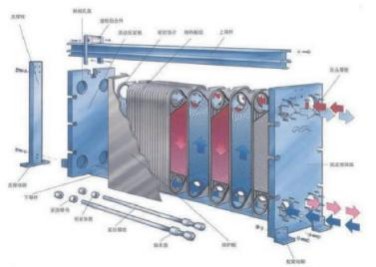
Plate heat exchangers are available in a range of series, including assembled, brazed, wide-gap free-flow, double-wall, semi-welded, and multi-section types. They are widely used in steelmaking, power generation, non-ferrous metals, fats and oils, chemicals, petrochemicals, marine applications, HVAC, refrigeration, pharmaceuticals, dairy, brewing, beverages, district heating, and other industries. The plates are uniquely designed using ultra-fine-grid numerical simulation technology combined with precise experimental measurement methods to achieve excellent flow and heat-transfer performance. The specially designed plate patterns generate turbulence at low fluid velocities, greatly increasing the heat-transfer coefficient. A plate heat exchanger consists of efficient heat-transfer corrugated plates and a frame. The plates are bolted between a fixed pressure plate and a movable pressure plate, forming multiple flow channels inside the exchanger. Rubber gaskets seal the plates. Connections on the pressure plate link the unit to external systems. The plates are pressed from high-quality corrosion-resistant metal sheets, with four corner ports for the inlet and outlet of the process media and hanging holes at the top and bottom. The herringbone corrugations increase fluid turbulence, enabling turbulent flow at low velocities and delivering high heat-transfer performance. A special structure also ensures that the two fluid media cannot mix through leakage.
Applications
Food Industry
Heating of raw fruit juice, pasteurization and cooling, pulp heating, syrup heating, heating of carbonated fruit juice
Pharmaceutical Industry
Citric acid heating, infusion cooling, antibiotic solution heating, emulsion cooling, suspension heating, plasma heating
HVAC
Flue gas desulfurization, circulating water cooling, boiler air preheating, district heating centers, central cooling systems for air-conditioning plants, heat pump stations
Power and Energy
Potassium carbonate solution cooling, process heating and cooling, waste heat recovery
Petrochemicals
Caustic solution cooling, acid solution cooling, chlorine solution cooling, paraffin cooling
Light Industry and Textiles
Wastewater cooling, wash water cooling, wastewater heat recovery, pulp slurry condensation
Automotive Industry
Paint cooling, phosphate solution cooling, quenching oil cooling
Metallurgy and Steel
Mold cooling, hydraulic oil cooling
Product Structure
A plate heat exchanger is a new type of high-efficiency heat exchanger made by stacking metal plates with specially formed corrugations. The working fluids flow through narrow, tortuous channels formed by adjacent plates, with heat transferred through the plates separating them.
Product Advantages
1. Facilitates the use of low-temperature heat sources
Because the two media flow almost entirely countercurrent to each other, and the minimum temperature difference for the same medium in a high-efficiency plate heat exchanger can be as low as 1°C, it is an ideal choice for recovering low-temperature waste heat or utilizing low-temperature heat sources.
2. Lower investment and wide range of applications
For the same heat-transfer capacity, compared with a shell-and-tube heat exchanger, a plate heat exchanger requires less heat-transfer area and floor space, and reduces fluid resistance and cooling-water consumption. This significantly lowers equipment and construction investment, as well as energy and material costs, making it more economical and energy-efficient. The wide choice of materials also makes it suitable for heat exchange involving a variety of media, including corrosive media.
3. Compact footprint, easy maintenance, and high flexibility
Plate heat exchangers have a compact structure and small footprint. Thanks to their highly compact design, a plate heat exchanger requires only 1/2–1/4 of the area of a shell-and-tube heat exchanger to achieve the same heat-transfer performance. It occupies only 1/2–1/3 of the space. No large maintenance clearance is required: simply loosen the clamping bolts to access 100% of the heat-transfer plate surfaces within the existing space. Disassembly is convenient and cleaning is easy. As the plates can be readily removed, the desired capacity and heat-transfer performance can be achieved by adjusting the number of plates or changing the flow arrangement. Using the exchanger’s intermediate frame, the plate assembly can also provide a range of unique functions. This gives users the flexibility to change the processing capacity, adjust the heat-transfer coefficient K, and add new functions at any time.
4. Low heat loss, low pressure drop, and reduced cooling-water consumption
Because of its compact structure and small size, the heat exchanger has a very small external surface area and therefore very low heat loss; insulation is usually unnecessary. With a suitable flow velocity selected to achieve the same heat-transfer coefficient, the pressure drop of a plate heat exchanger can be controlled to around one-third that of a shell-and-tube heat exchanger. Owing to the geometry of its flow channels and the high thermal efficiency of both liquids, it can greatly reduce cooling-water consumption.
New Positioning Design
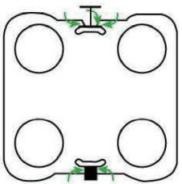
Our plate heat exchangers feature a unique dovetail-groove structure and multipoint positioning. One side fully constrains the degrees of freedom, while the other side allows longitudinal extension without fully constraining them. When heated and clamped, the plates can extend downward longitudinally, greatly reducing the likelihood of leakage. The plates do not deform, and can be removed more easily and quickly once they reach a certain angle. They also feature “four-corner interlocking” and “self-positioning” functions.
New Gasket Design
The sealing gaskets in our plate heat exchangers feature a triangular-roof design for improved sealing. The plates remain undeformed after repeated assembly and disassembly.
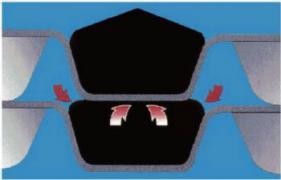
Soft and Hard Plate Design
Our plate heat exchangers use an advanced thermal-mixing design that provides a complete match between heat-transfer capacity, flow rate, and allowable pressure drop over a wide range of operating parameters, while reducing the required heat-transfer area.
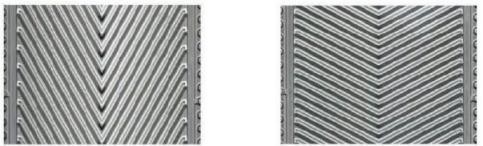
Extensive Range of Plate Models
Gasketed plate heat exchangers are available in more than 60 models. Depending on corrugation angle, each model is available with either a high-angle or low-angle pattern. To suit different fluid media, each plate model is also available in three groove depths: shallow, deep, and extra-deep. These plates can be assembled into plate heat exchangers with narrow, wide, or extra-wide flow channels.
Technical Advantages of Extensive Plate Combinations
The heat-transfer and flow performance of a plate varies with its length, width, groove depth, and corrugation angle. Since operating conditions vary widely, each plate model generally delivers optimum heat-transfer performance only within a particular operating range. The extensive range of plate combinations therefore allows better matching to different heat-transfer conditions, achieving optimum heat-transfer performance while significantly reducing the cost of the plate heat exchanger. It also enables higher flow velocities between plates, thereby reducing the rate of plate corrosion and fouling.
Unique Plate Design
Ultra-fine-grid numerical simulation technology, combined with precise experimental measurement methods, is used to design plates with excellent flow and heat-transfer performance. The specially designed plate patterns generate turbulence at low fluid velocities, greatly increasing the heat-transfer coefficient. The plate molds are designed to create up to several thousand contact points between plates, distributing pressure evenly and providing high pressure resistance, meeting the 2:5 MPa unit standard.
Advanced Distribution Zone
The plate distribution zone features streamlined guide grooves that balance differences in flow resistance caused by uneven fluid distribution among channels. This prevents reduced heat-transfer efficiency, pitting, and dead-zone fouling caused by uneven flow distribution and stagnant zones.
High-Performance Gaskets and Gasket Grooves
Adhesive-free clip-on gaskets interlock securely with the plates to prevent displacement under pressure. Two seals are provided between the hot and cold fluids, with a leakage zone in between. Even if a channel gasket is damaged and leakage occurs, the two fluids will not mix; instead, the leaking fluid will pass through the leak port to the outside.
Scientifically Designed Frame Structure
The five-point positioning suspension system ensures accurate positioning of the plates at the top, bottom, left, and right, and allows the plates to lock together automatically during clamping. This makes it easy to realign the plates precisely when returning them to position, eliminating errors caused by manual operation and ensuring performance after the heat exchanger is reassembled. It also extends gasket service life. The front and rear pressure plates are cut to shape in a single CNC operation and undergo surface micro-forging to increase surface strength. Specially designed lock nuts and rolling components are used, made from high-strength, wear-resistant, and corrosion-resistant materials.
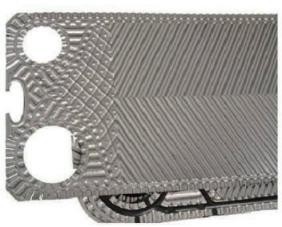
Our products feature a unique plate design, with heat-transfer, flow-resistance, and temperature-resistance performance at an advanced level in China and internationally. Major components are made from imported materials, and plate thickness ranges from 0.5–0.8 mm. BR, BBR, KnBR, KbBR, and BRH series plate heat exchangers are available for domestic and international markets to meet the diverse needs of different users. Our products are manufactured in strict accordance with national standard GB16409—1996.
Water-to-water heat exchange: The heat-transfer coefficient K can be selected within the range of 2000–6000 W/m², depending on the flow velocity between plates.
Design pressure: Available in three ratings: 1.0 MPa, 1.6 MPa, and 2.5 MPa. The 1.0 MPa rating is the standard type. Please consult our company if a product with a higher design pressure is required.
Design temperature: 170°C. Long-term operation at 150°C is recommended. For short-term operation or small installed areas, the unit can be used at 170°C. If the temperature of saturated or superheated steam exceeds 170°C, upstream equipment is required. This equipment can be supplied together with the main unit by our company.
Plate materials: The following corrosion-resistant materials are available: SUS304, SUS321, SUS316, SUS316L, 254SMO, 2205 stainless steel, Hastelloy, commercially pure titanium TAI, pure nickel N6, and domestic high-grade stainless steel RS—2.
Gasket materials: The following elastomers are available: nitrile rubber, EPDM, fluororubber, chloroprene rubber, and silicone rubber.
Plate Materials
Gasket Materials

Basic Parameters
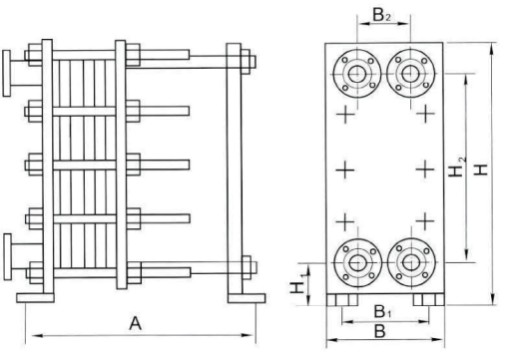
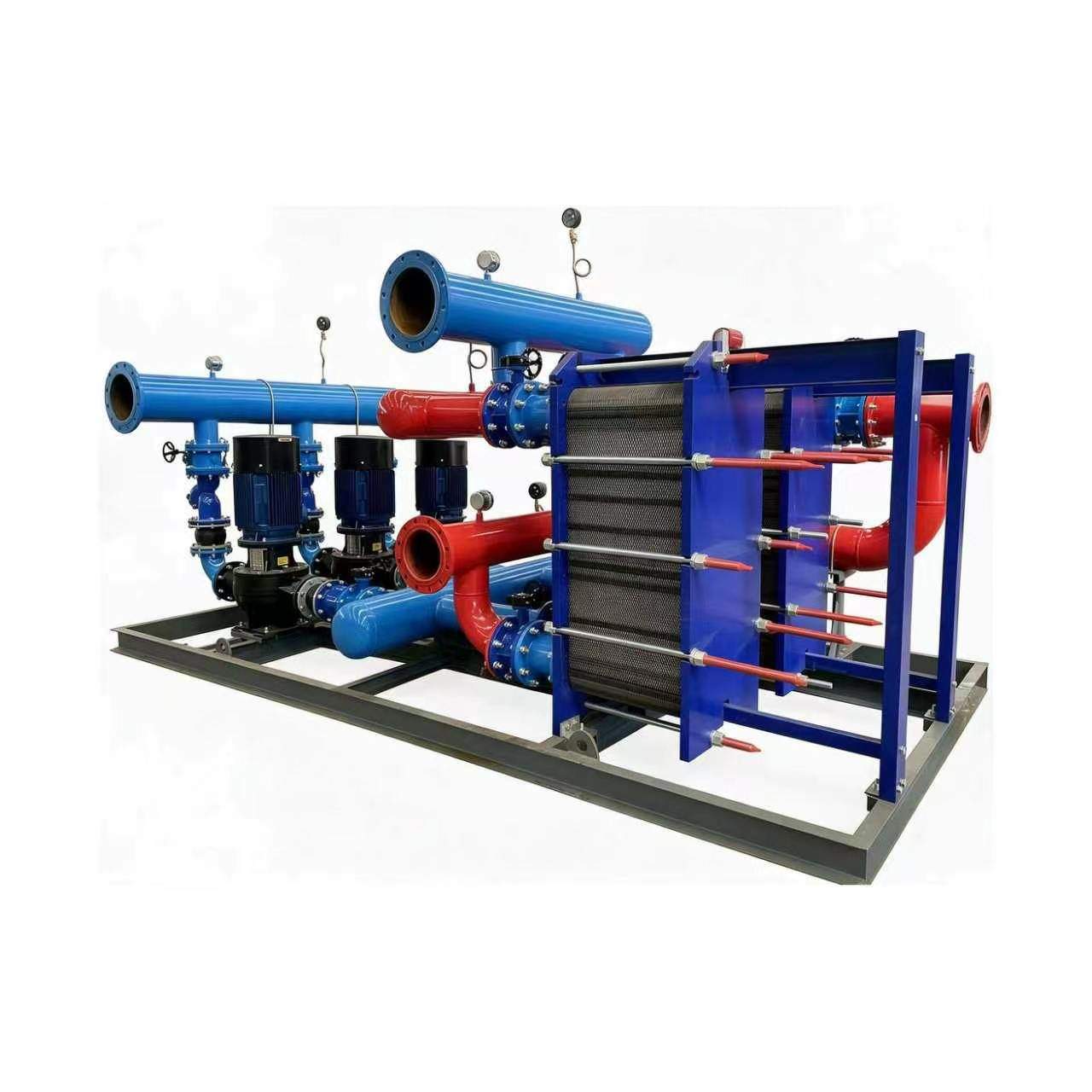
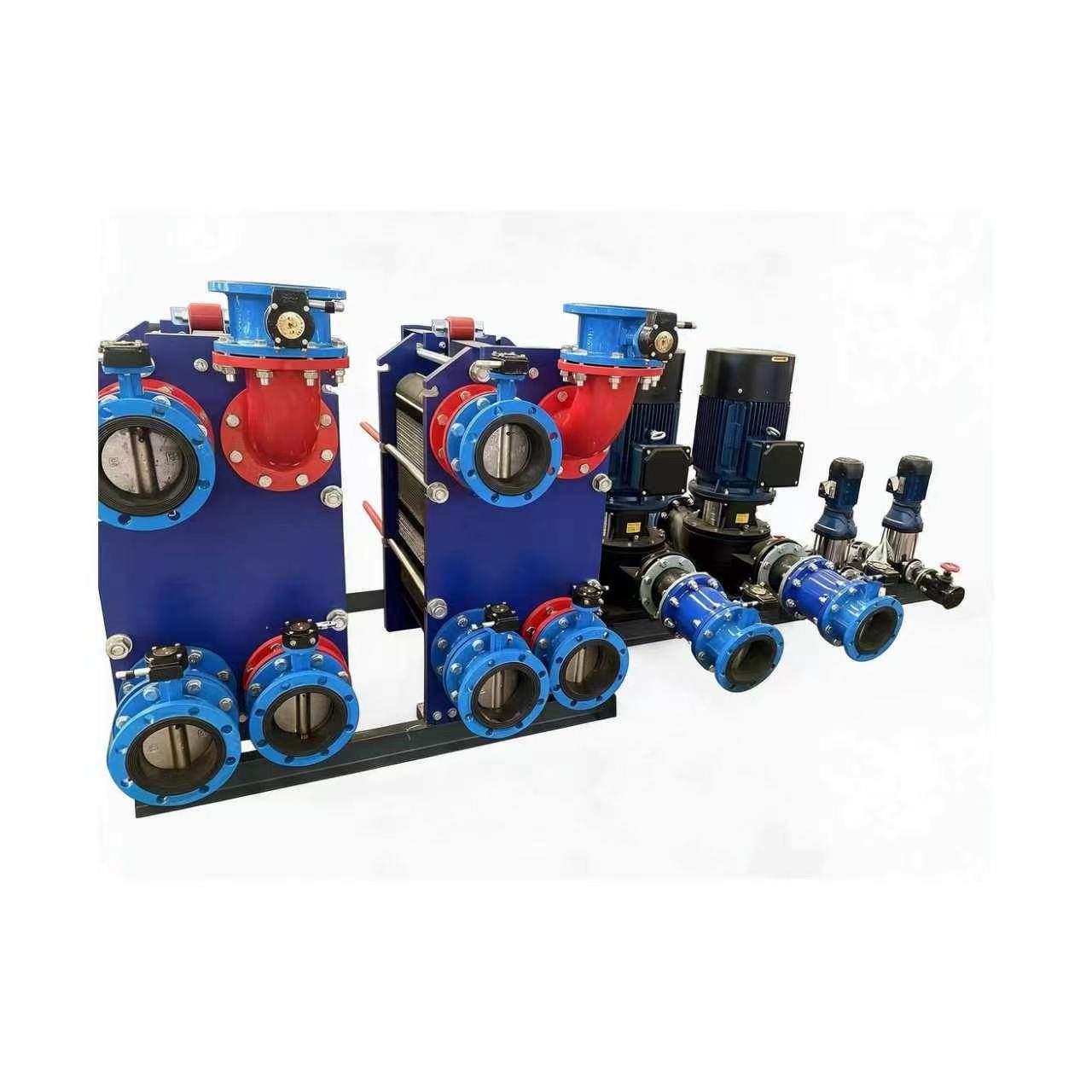
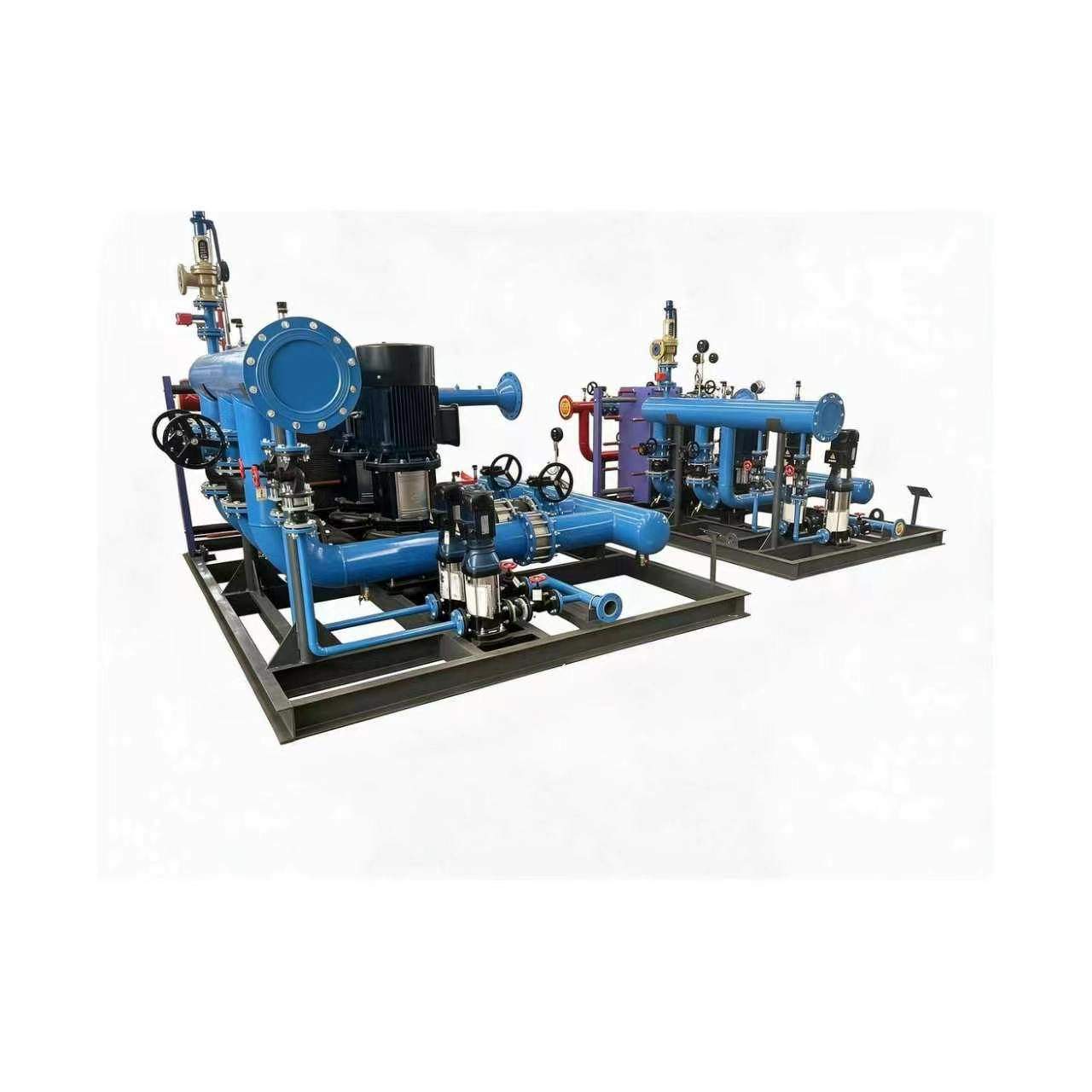
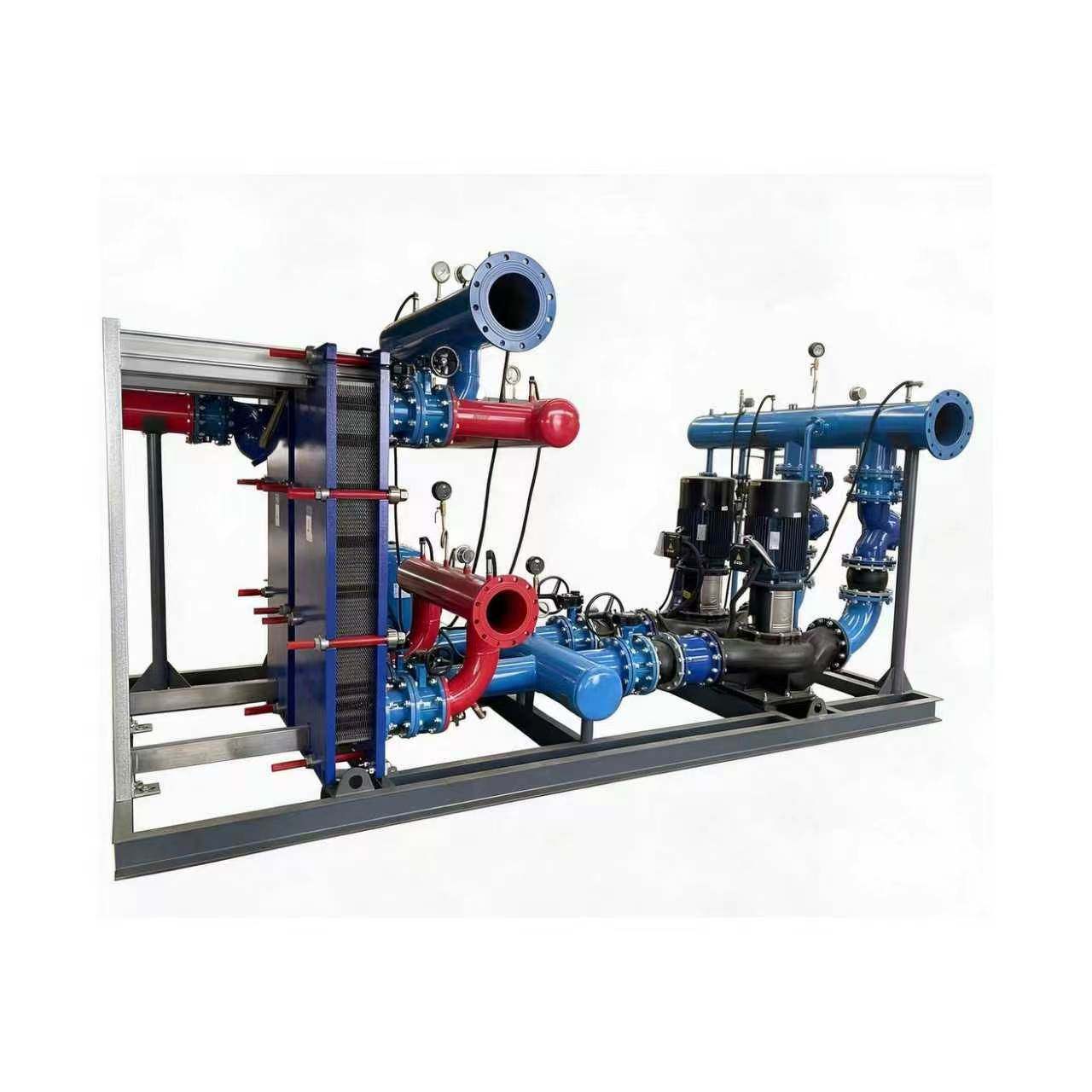
Plate Heat Exchanger Units
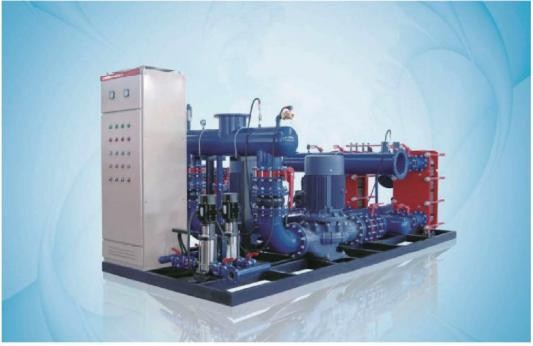
Product Description:
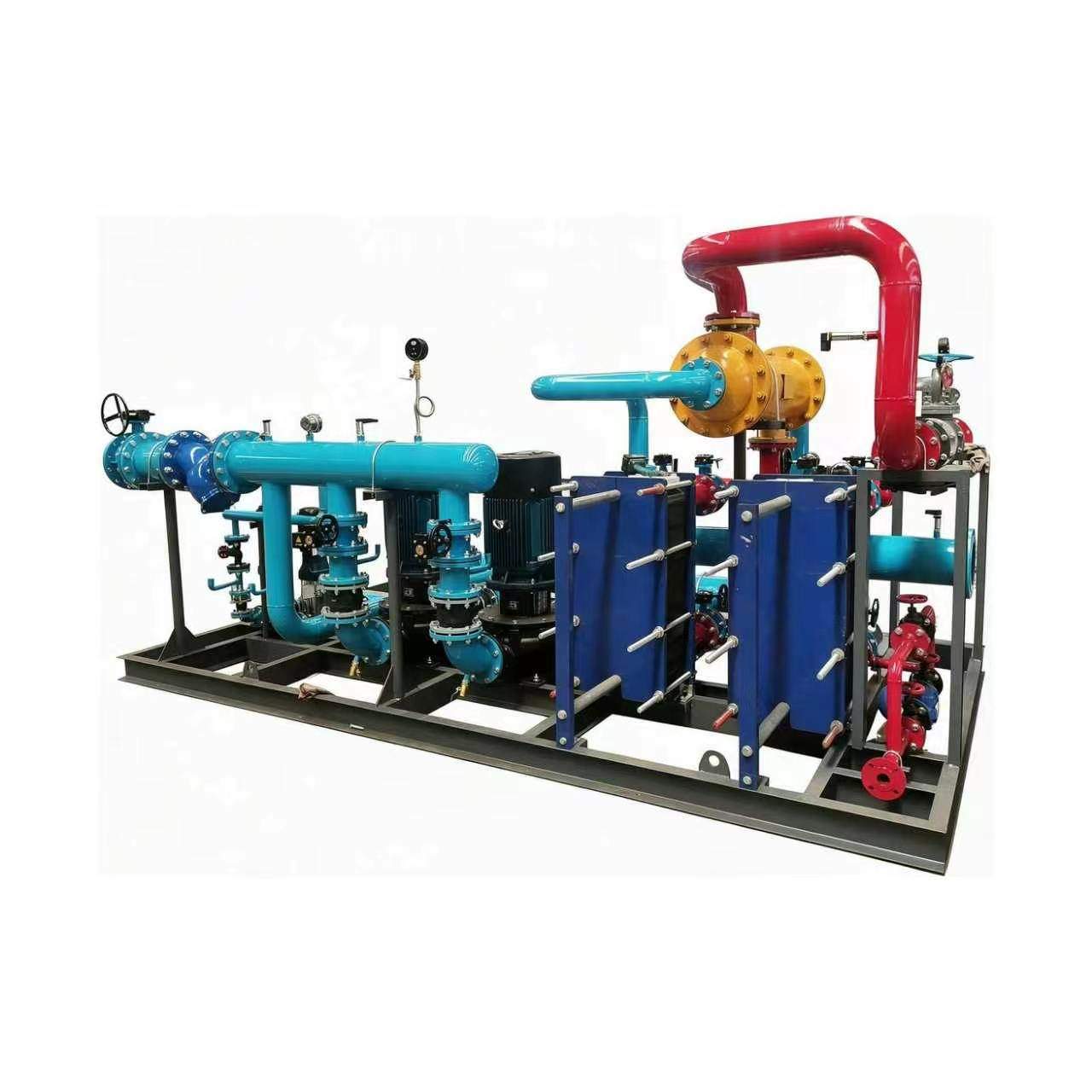
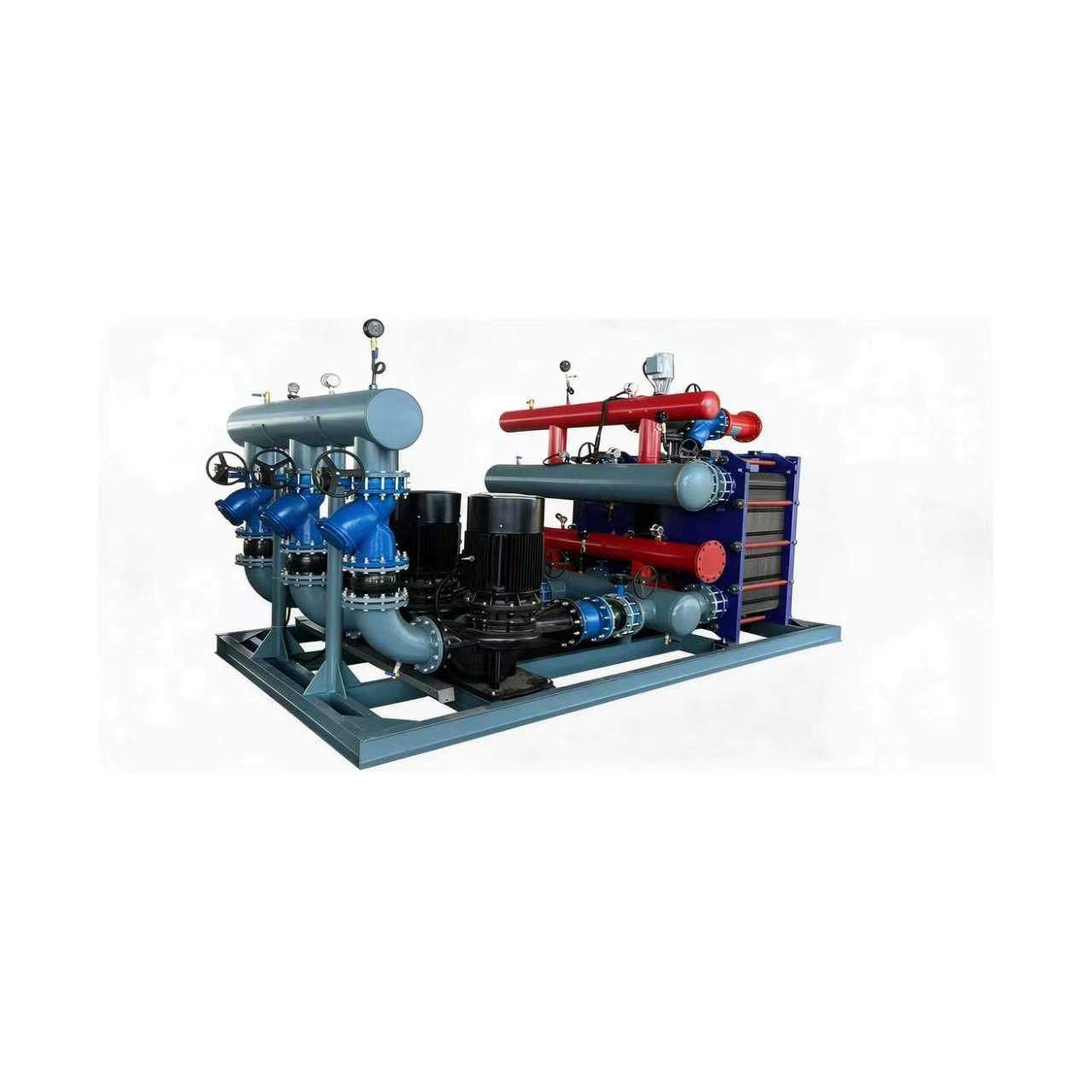
The intelligent heat exchanger unit is an integrated system incorporating a heat exchanger, circulation pumps, a make-up water pump, instruments, sensors, electrical controls, valves, and piping. It supports engineering calculations and optimized design, and features high-quality hardware, a rational layout, an advanced control system, convenient operation and management, and reduced operating costs. It provides integrated heat-exchange solutions for users with different requirements and is widely used in district heating and cooling systems, domestic hot-water systems, waste heat recovery, seawater desalination, process cooling systems, and many other applications.
Industry Solutions for Intelligent Heat Exchanger Units
District Heating Heat Exchanger Units
District heating is widely recognized as an energy-efficient and environmentally friendly heating model. Maximizing energy savings and environmental protection is the guiding principle in heat exchanger unit design.
Building Heating/Cooling Heat Exchanger Units
With the rapid pace of urban development, more and more buildings are adopting central air-conditioning systems for heating and cooling. Thanks to their high efficiency, compact size, and ease of management and maintenance, heat exchanger units are increasingly used in hotels, shopping centers, office buildings, healthcare and educational facilities, sports venues, exhibition centers, and other projects, where they serve as a critical component of central air-conditioning systems.
Domestic Hot Water Heat Exchanger Units
Heat exchanger units provide instantaneous hot water. Using internationally advanced control and heat-transfer technologies, they supply users with clean, temperature-controlled domestic hot water of high quality. They are widely used in hotels, hospitals, swimming pools, bathhouses, and other facilities.
Industrial Park Heat Exchanger Units
Industrial parks contain various types of buildings, including offices, production workshops, restaurants, and employee activity centers. Their heating loads, temperature and pressure requirements, and operating schedules differ. Industrial park heat exchanger units use modular design and intelligent control to meet the diverse requirements of different buildings and achieve optimum heating performance.
Process Cooling Heat Exchanger Units
Industrial production processes continuously require heat transfer and conversion. Heat exchanger units for production processes can use all-stainless-steel wetted components and advanced control systems. They meet process requirements for temperature, pressure, flow rate, and other parameters, as well as media cleanliness requirements, and are widely used in power stations, chemicals, electronics, optoelectronics, pharmaceuticals, and other industries.
Waste Heat Recovery Heat Exchanger Units
Large amounts of waste heat are generated in everyday production and living, including waste steam, vacuum steam, condensate, cooling circulating water, domestic wastewater, and industrial wastewater. These operating conditions are often complex, making heat recovery challenging. Waste heat recovery heat exchanger units use high-efficiency heat exchangers for precise selection and calculation, maximizing heat extraction from these media. The recovered heat can be used in processes such as domestic hot-water heating, boiler make-up water preheating, swimming pool circulating water heating, air-conditioning and heating water-loop heating, and process hot-water preparation, delivering significant social and economic benefits.
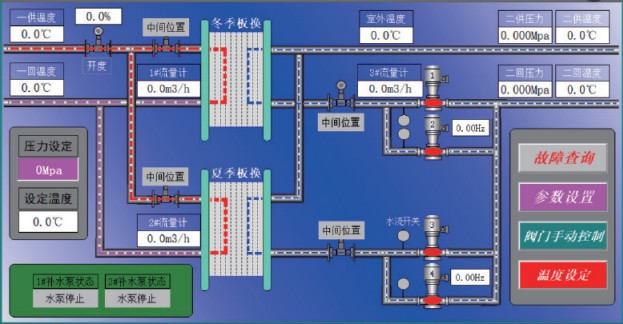
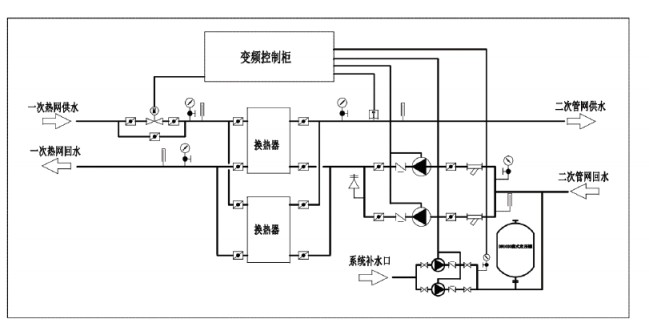
Process Flow Diagram of the Water-to-Water Heat Exchanger Unit Control System
Frequently Asked Questions
Please provide the model, airflow, total/static pressure, installation orientation, air inlet and outlet configuration, material, insulation, motor voltage/frequency, control method, filter module, smoke control and fire protection requirements, quantity, and packaging requirements. Performance, dimensions, and certification information are subject to the confirmed product and order documents.