


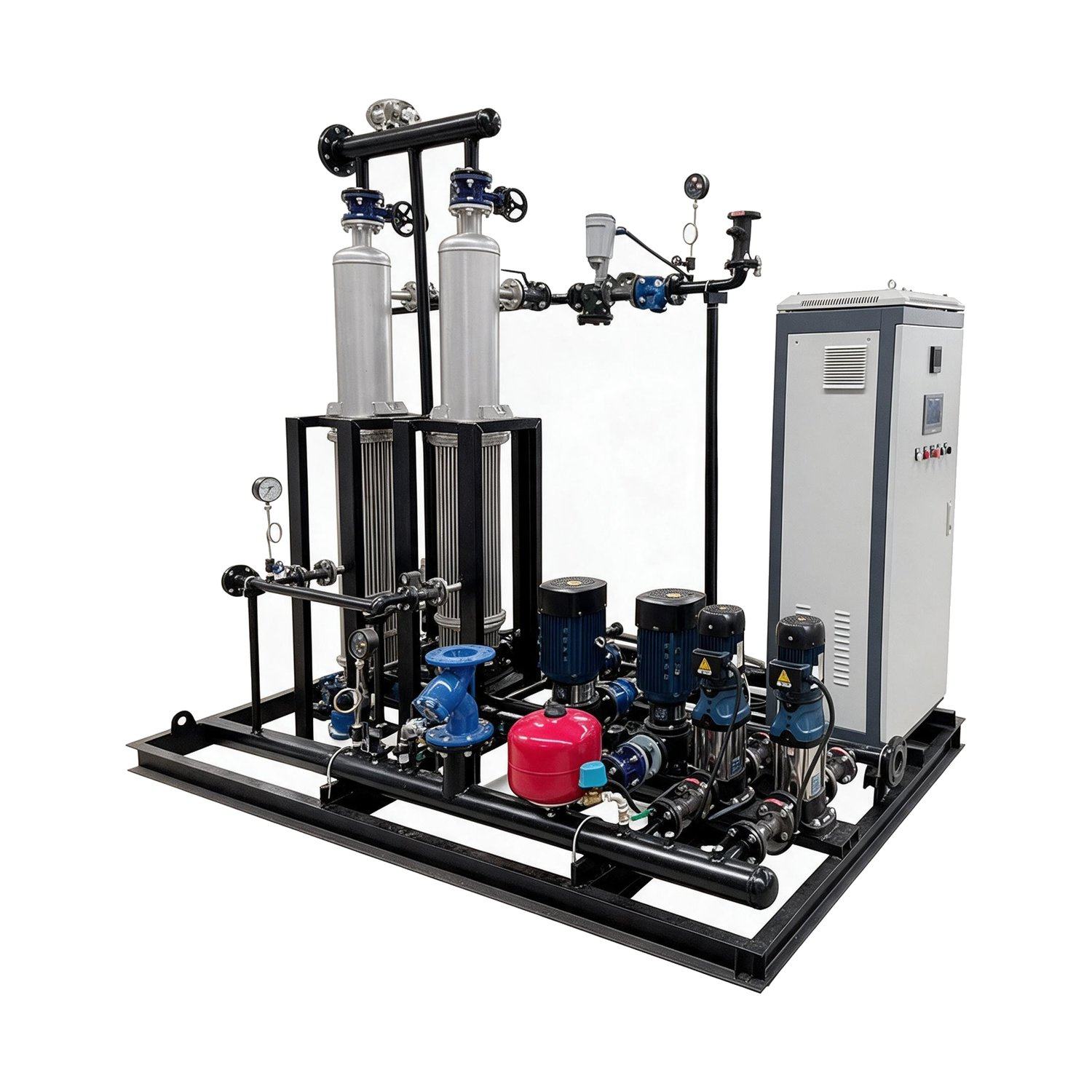
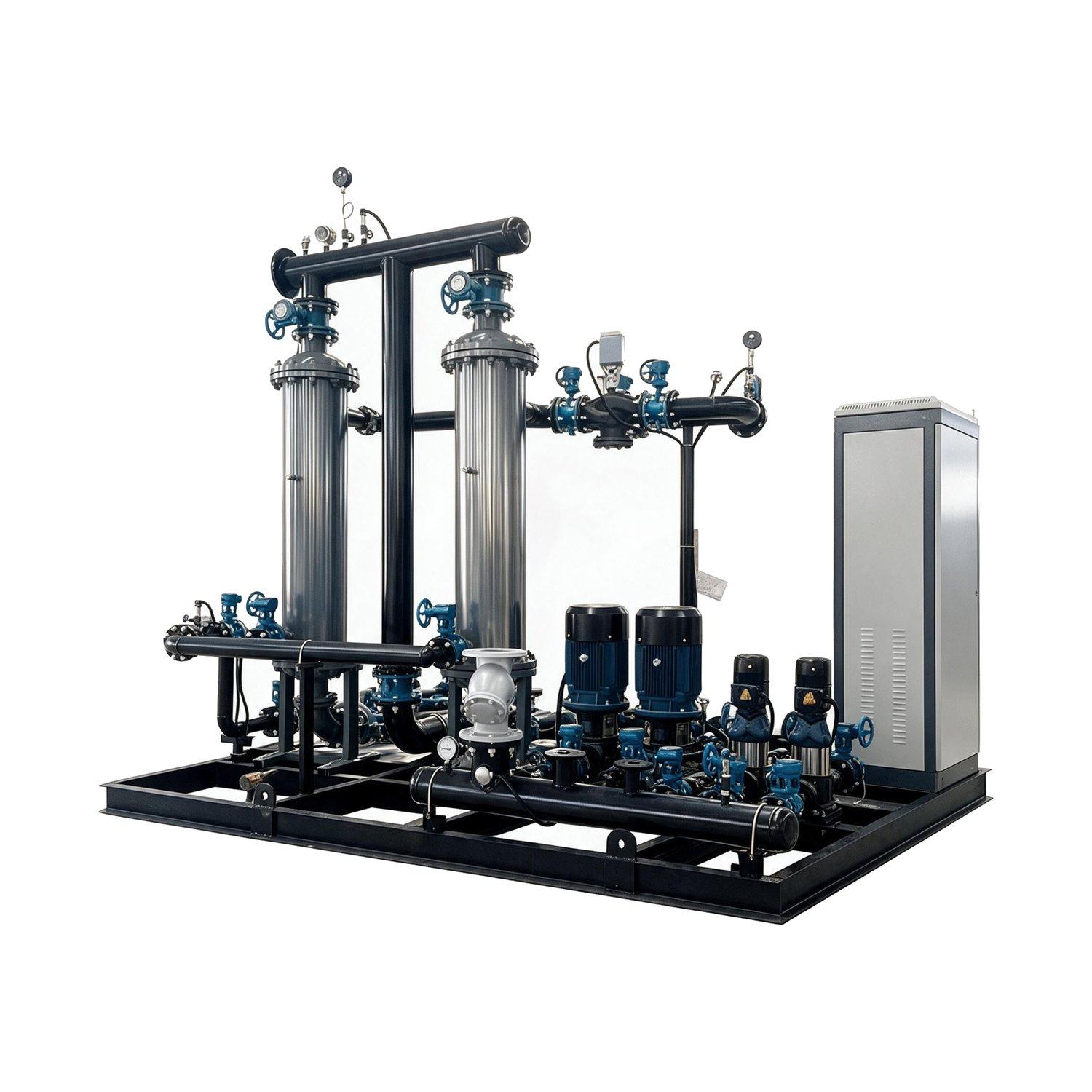
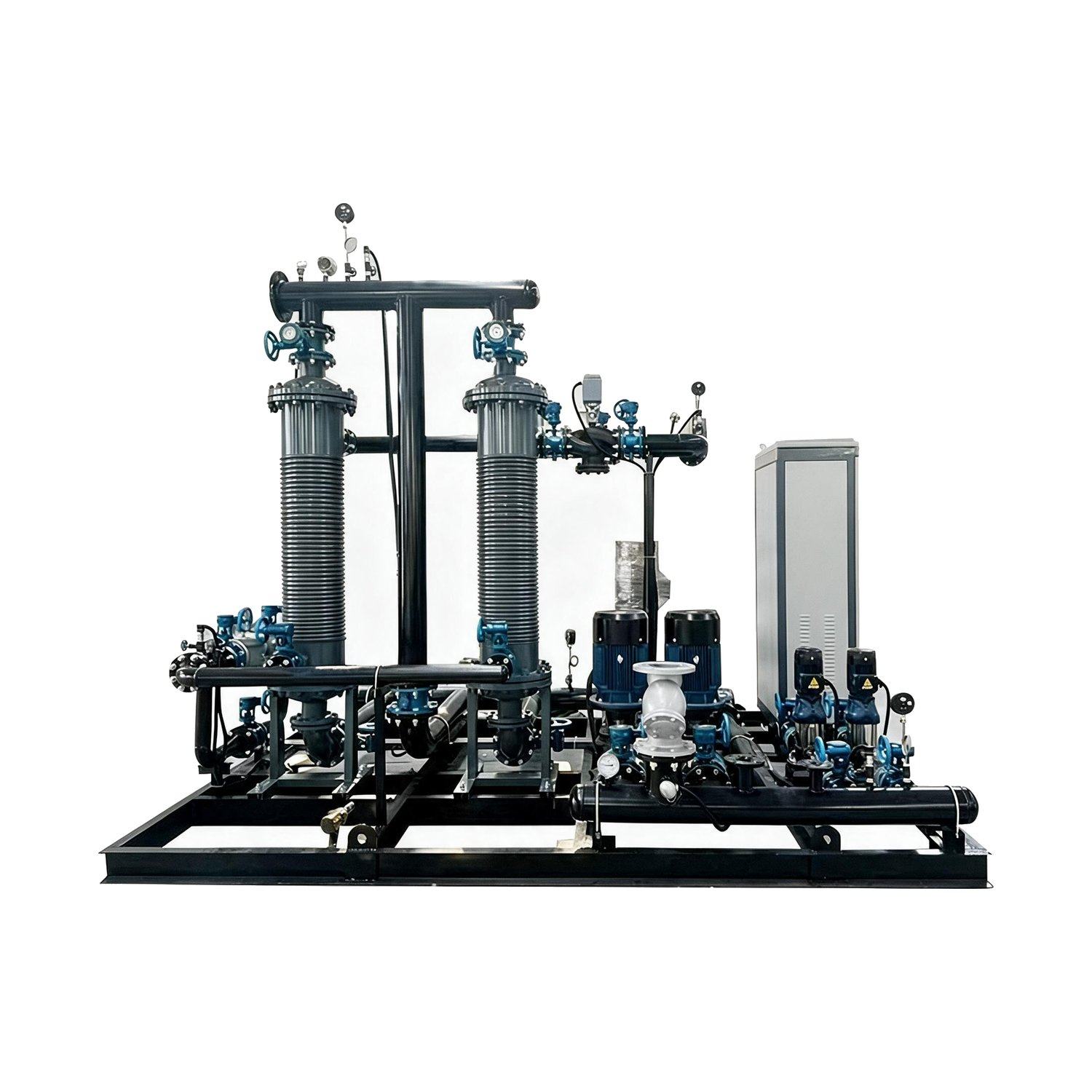
Threaded Tube Heat Exchange Unit
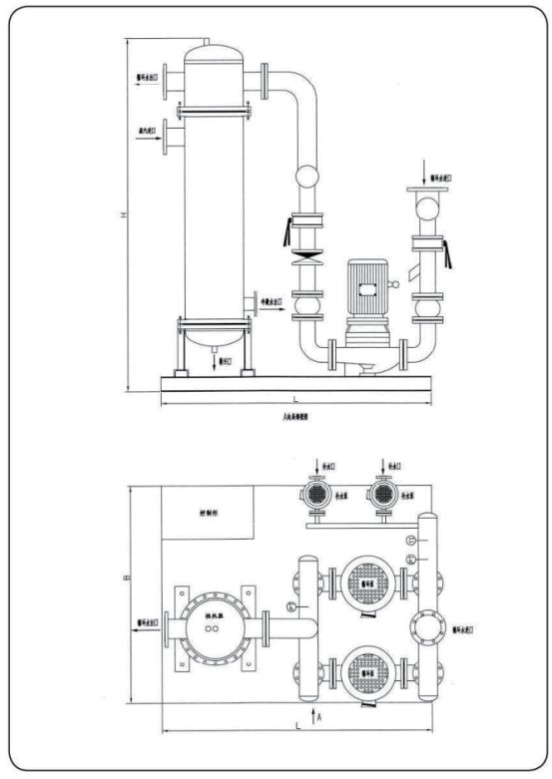
Reference Outline Drawing of the Variable-Frequency Water Make-Up, Double-Thread Turbulent Heat Exchanger Steam-to-Water Air Conditioning (Underfloor Heating) Unit
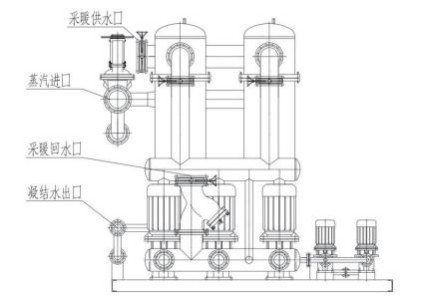

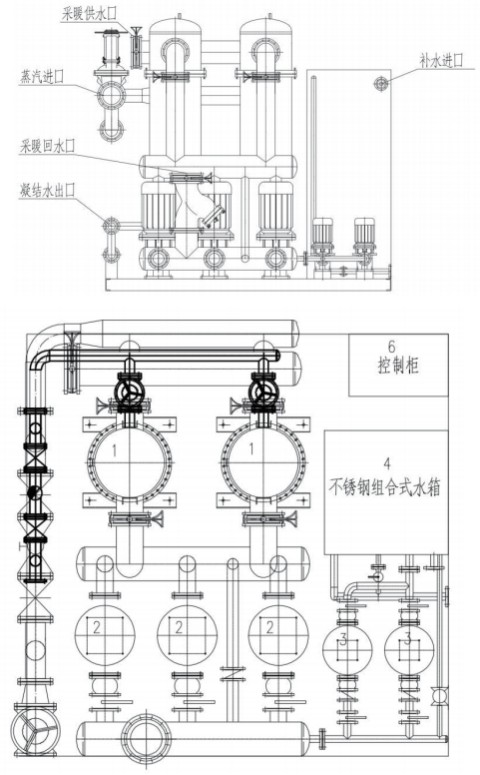
Reference Outline Drawing of the Pressure-Stabilizing Expansion Vessel Water Make-Up, Double-Thread Turbulent Heat Exchanger Steam-to-Water Air Conditioning (Underfloor Heating) Unit
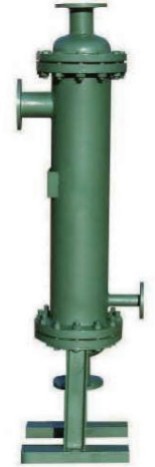
Vertical U-Tube Water Heater
Product Features
The vertical U-tube water heater is an indirect water-heating device. It uses U-tubes connected by flanges for easy disassembly and installation. It can use one or more heat sources; common sources include boilers, heat pumps, and solar energy.
Advantages
Maximum operating pressure: 25 MPa
Volume: 100 L to 15,000 L
Heat exchanger capacity: 10 kW–10,000 kW
Equipped with U-tube heat exchangers
Low water level alarm
The high-efficiency heat exchange equipment is made primarily of copper, 304, 316, 316L, or 316Ti stainless steel.
Certificates and Standards
GB150, GB151
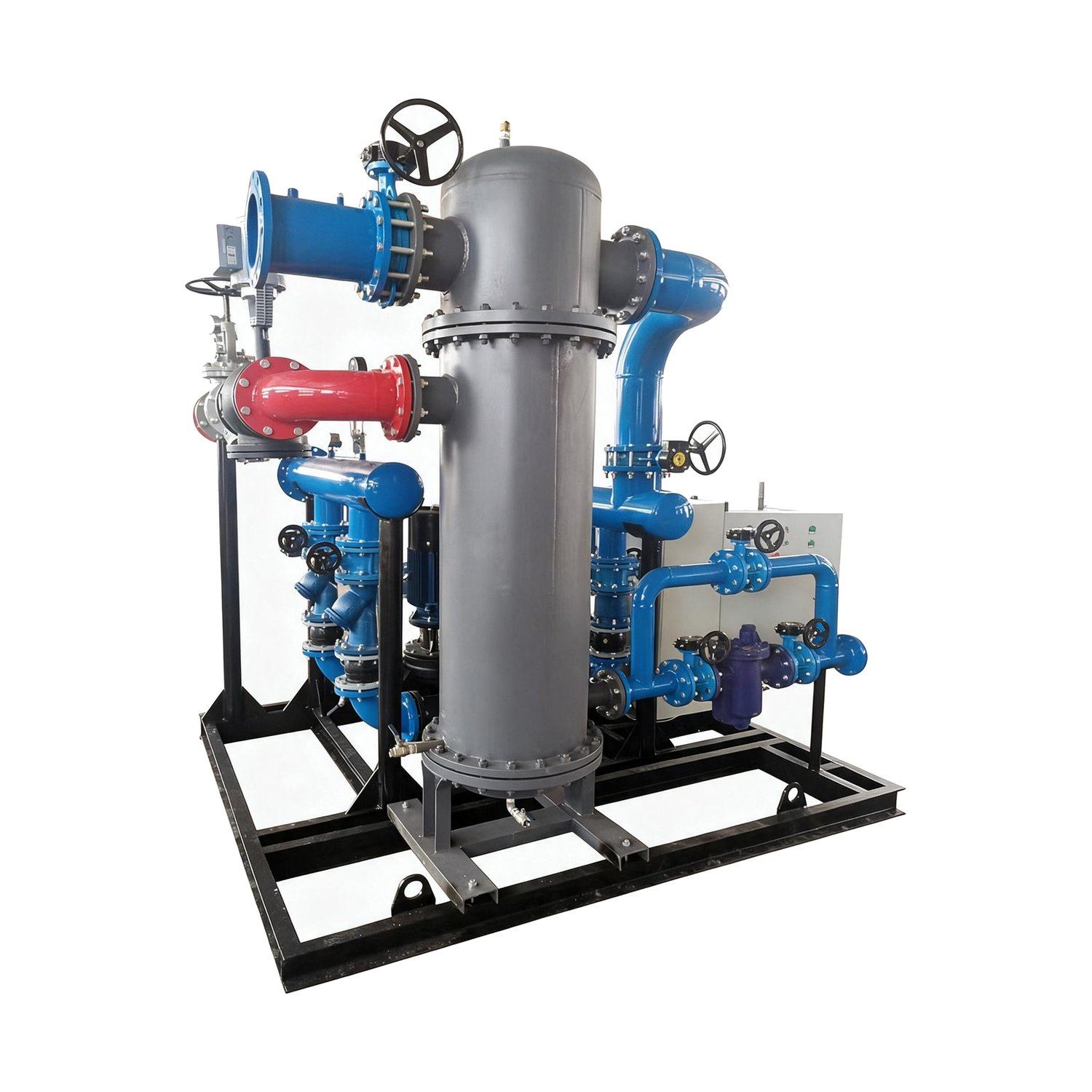
Double-Thread Turbulent Heat Exchanger
Overview
The double-thread turbulent heat exchanger was developed based on the introduction of advanced technologies from China and abroad, combined with the principles of fluid mechanics and heat transfer. It incorporates the features of heat exchange equipment currently used in China to create a new type of heat exchange equipment.
Applications
The double-thread turbulent heat exchanger is available in steam-to-water and water-to-water configurations. It is generally used in heating and air conditioning systems, for domestic hot water production, and for heat exchange involving other industrial water applications.
Equipment Features
The double-thread turbulent heat exchanger manufactured by our company is compact, occupies little space, is easy to transport, and has a compact structure. The equipment uses stainless steel tubes, which are high-performance heat exchange components manufactured using a special process. During normal heat exchange, the special design creates turbulent heat transfer. This design causes the fluids inside and outside the tube walls to flow in a fully developed manner, achieving optimum heat transfer. Within the fully developed flow range, the heat transfer coefficient of the steam-to-water type can reach 4000–60000/m2 ℃. During operation, the double-thread turbulent heat exchanger creates turbulent flow, while the double-threaded tubes themselves compensate for thermal expansion and contraction. As a result, the heat exchanger has a self-cleaning capability, is less prone to scaling, and prevents suspended solids and impurities in the fluid from readily adhering to the tube walls. Since the double-threaded heat exchange tubes can expand and contract and have high flexibility, the heat exchanger correspondingly reduces during heat transfer, making leakage at connections less likely. To use the unit, simply connect the water (steam) inlet and outlet ports. The high heat transfer coefficient of the double-threaded heat exchange tubes and the equipment’s special structure make the unit relatively compact, with a smaller surface area and lower radiant heat loss. In particular, in the design of the steam-to-water subcooling section, a larger heat transfer area is used to lower the condensate discharge temperature, thereby maximizingthe utilization of steam energy. This reflects the efficient, energy-saving design concept behind advances in heat transfer technology, while also accommodating different site conditions and user requirements.
Model Designation
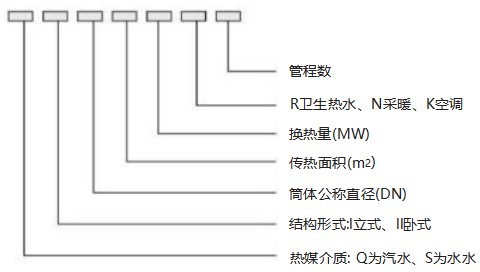
Outline Drawing of the Steam-Water Corrugated-Tube Enhanced Heat Exchanger

Frequently Asked Questions
Please provide the model, airflow, total/static pressure, installation orientation, air inlet and outlet configuration, material, insulation, motor voltage/frequency, control method, filter module, smoke control and fire protection requirements, quantity, and packaging requirements. Performance, dimensions, and certification information are subject to the confirmed product and order documents.